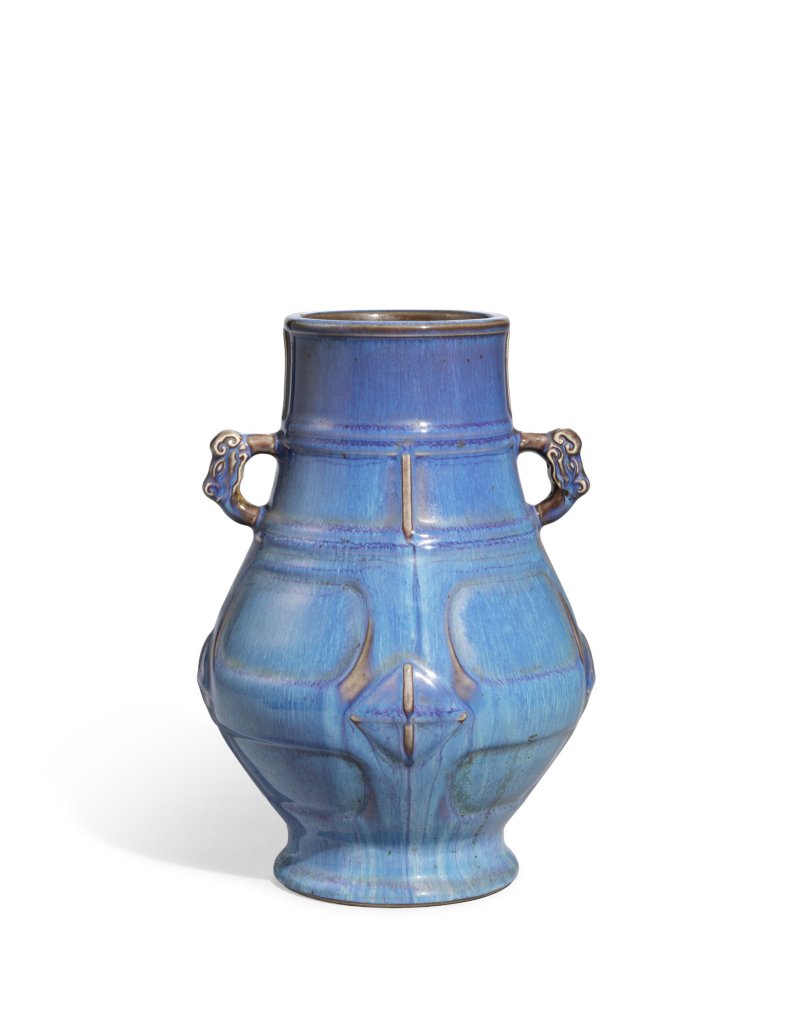

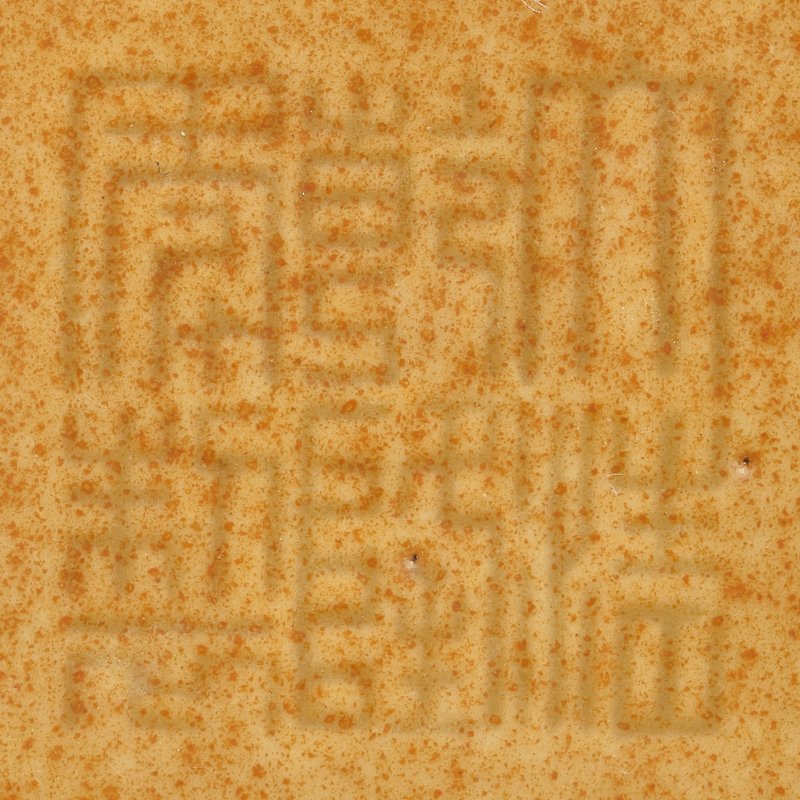
Lot 6007 A fine and extremely rare flambé Jun-imitation vase, hu, Seal mark and period of Qianlong | 清乾隆 仿鈞天藍窰變釉雙耳壺 《大清乾隆年製》款
落槌价
预展中
成交价
预展中
| 拍卖公司 | 苏富比 |
|---|---|
| 拍卖时间 | 2026年10月30日 |
拍品信息
拍品名称
A fine and extremely rare flambé Jun-imitation vase, hu, Seal mark and period of Qianlong | 清乾隆 仿鈞天藍窰變釉雙耳壺 《大清乾隆年製》款
起拍价
HKD 500,000
估值区间
500,000 - 700,000 HKD
尺寸
未知
品相
Good overall condition, with only minor firing imperfections, including minor kiln flakes to the foot rim.
整體品相良好。僅見窰燒微瑕,包括足部釉面淺細剝痕。
If a condition report is provided to assist you with assessing the condition of the lot, it is for guidance purposes only. Such condition report may not refer to all faults, restoration, alterations, or adaptations because Sotheby's is not a professional conservator or restorer but rather a condition report is a statement of subjective, qualified opinion genuinely held by Sotheby's. For these reasons, any such condition report is not an alternative to taking your own professional advice regarding the condition of the lot. Prospective buyers should also refer to the Guide for Buyers at Auction which includes important notices concerning the type of property in this sale.
更多信息
25.5 cm
图录
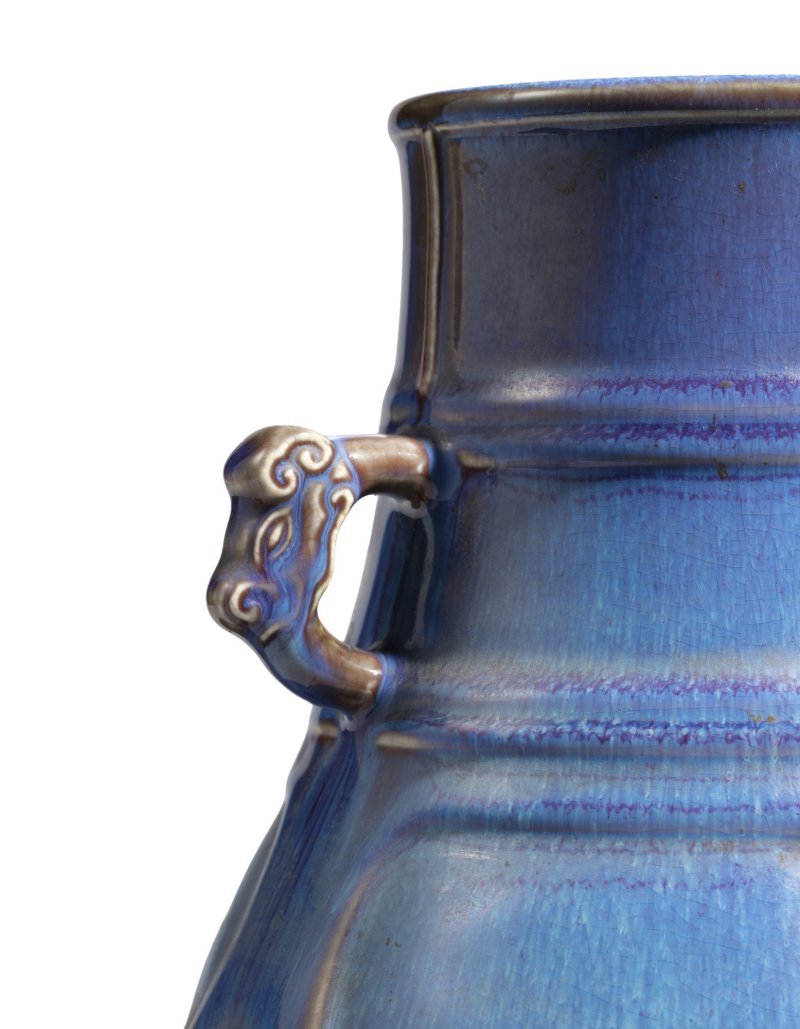
说明:This exceptional vase stands as a testament to the Qianlong Emperor’s deep reverence for antiquity, uniting a form inspired by ancient ritual bronzes with an attractive glaze created in imitation of Song dynasty ‘Jun’ ware. It is particularly rare for its relatively more delicate size, further elevated by the addition of elegant ruyi-cloud handles flanking the neck.
The monochrome ceramics of the Song period (960-1279) were highly revered by the Qianlong Emperor, who not only avidly collected them but actively commissioned the Imperial kilns to replicate their luminous glazes. The present vase displays vibrant hues of sky-blue streaked with lavender in faithful emulation of the Jun prototypes. The striking, unpredictable streaks characteristic of this decoration are known as yaobian (‘transmutation glaze’), achieved through precise firing techniques that allowed the glaze to fluidly flow and transform within the kiln.
This antiquarian passion was heavily influenced by Northern Song Emperor Huizong (1082–1135). In emulation of Huizong's 1123 catalogue Bogu tu [Illustrated Catalogue of Antiquities], Qianlong orchestrated the compilation of his own monumental court catalogues, including the Shiqu baoji, Midian zhulin, Tianlu linlang, and the Xiqing gujian (finalised in 1749). Rather than treating these compendiums as mere documentation, the court frequently ordered the production of new porcelain vessels directly based on their illustrations. Accordingly, this vase draws its archaistic silhouette from a Western Zhou dynasty (c. 1046–771 BC) bronze ritual hu, likely modelled after a specific lineage recorded in the Xiqing gujian (see fig. 1).
Vases of this form are also recorded in other monochrome glazes, compare a Qianlong mark and period Ge-type vase of larger size, illustrated in Regina Krahl, Chinese Ceramics from the Meiyintang Collection, vol. 2, London, 1994, pl. 873; a larger 'tea-dust' glazed vase of this form, also of Qianlong mark and period, is in the Palace Museum, Beijing, illustrated in Geng Baochang, ed., Gugong Bowuyuan cang Qingdai yuyao ciqi [Qing porcelains from the Imperial kilns preserved in the Palace Museum], Beijing, 2005, pl. 125.
常见问题
这件A fine and extremely rare flambé Jun-imitation vase, hu, Seal mark and period of Qianlong | 清乾隆 仿鈞天藍窰變釉雙耳壺 《大清乾隆年製》款的成交价是多少?
落槌价为 预展中。 成交价为 预展中。
拍品的品相状况如何?
Good overall condition, with only minor firing imperfections, including minor kiln flakes to the foot rim.
整體品相良好。僅見窰燒微瑕,包括足部釉面淺細剝痕。
If a condition report is provided to assist you with assessing the condition of the lot, it is for guidance purposes only. Such condition report may not refer to all faults, restoration, alterations, or adaptations because Sotheby's is not a professional conservator or restorer but rather a condition report is a statement of subjective, qualified opinion genuinely held by Sotheby's. For these reasons, any such condition report is not an alternative to taking your own professional advice regarding the condition of the lot. Prospective buyers should also refer to the Guide for Buyers at Auction which includes important notices concerning the type of property in this sale.
整體品相良好。僅見窰燒微瑕,包括足部釉面淺細剝痕。
If a condition report is provided to assist you with assessing the condition of the lot, it is for guidance purposes only. Such condition report may not refer to all faults, restoration, alterations, or adaptations because Sotheby's is not a professional conservator or restorer but rather a condition report is a statement of subjective, qualified opinion genuinely held by Sotheby's. For these reasons, any such condition report is not an alternative to taking your own professional advice regarding the condition of the lot. Prospective buyers should also refer to the Guide for Buyers at Auction which includes important notices concerning the type of property in this sale.