
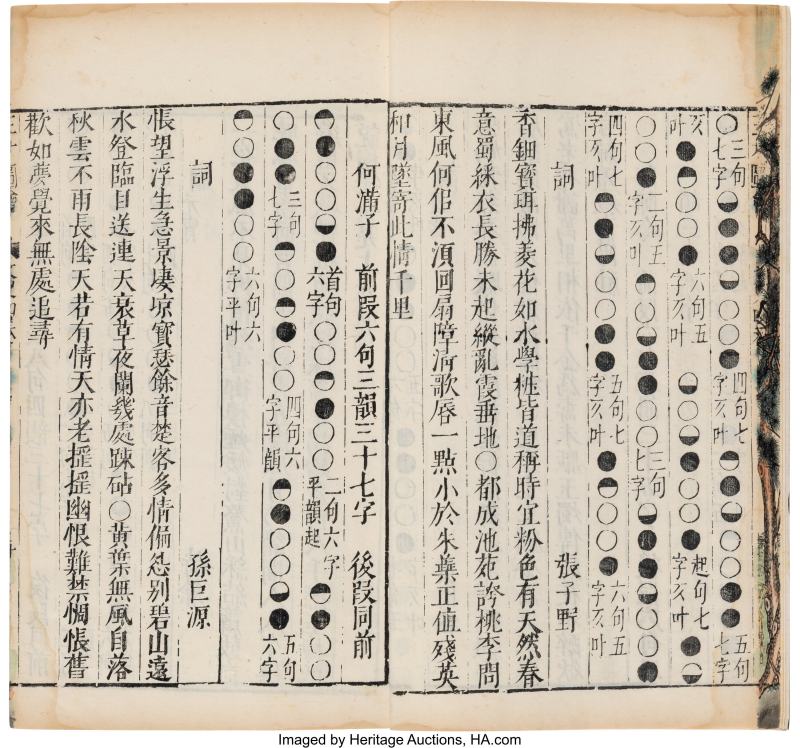
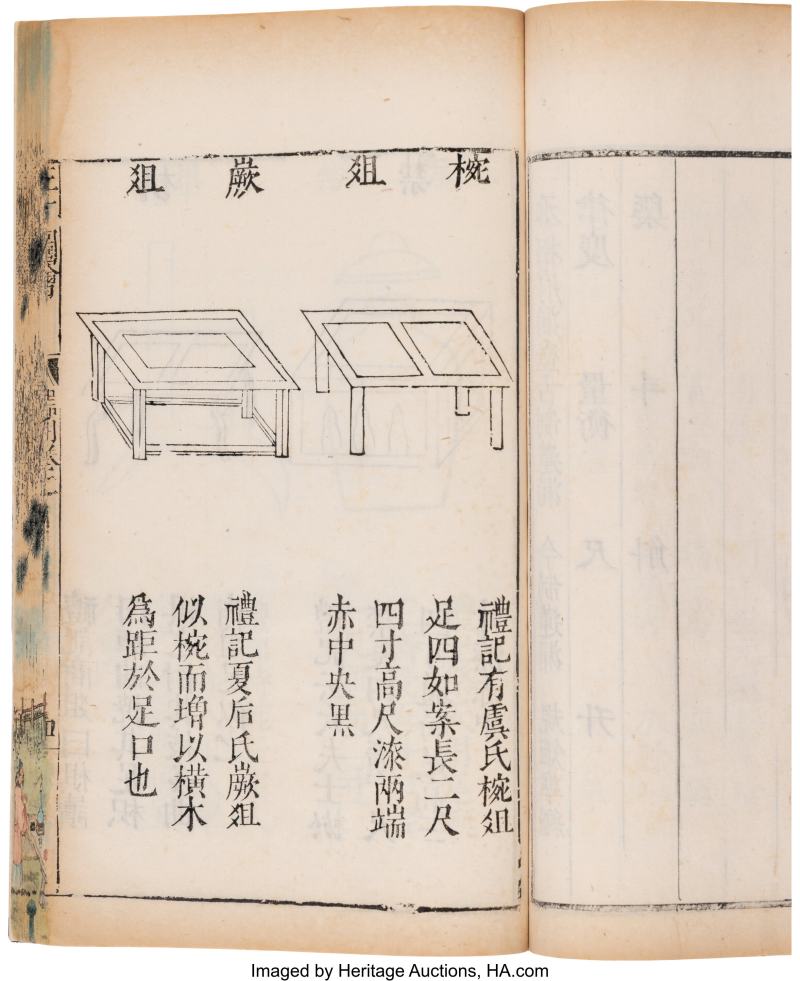
Lot 78119 Attributed to Lu Hongnian (Chinese, 1919-1989), A Volume of San Cai Tu Hui "Assembled Illustrations of the Three Powers", Decorated with Fore-Edge Painting
落槌价
****
成交价
****
拍品信息
拍品名称
Attributed to Lu Hongnian (Chinese, 1919-1989), A Volume of San Cai Tu Hui "Assembled Illustrations of the Three Powers", Decorated with Fore-Edge Painting
起拍价
未知
估值区间
$2,000 - $3,000
尺寸
10-3/4 x 6-7/8 x 1 inches (27.3 x 17.5 x 2.5 cm) (overall)
品相
Condition report available upon request.
更多信息
Ink on paper
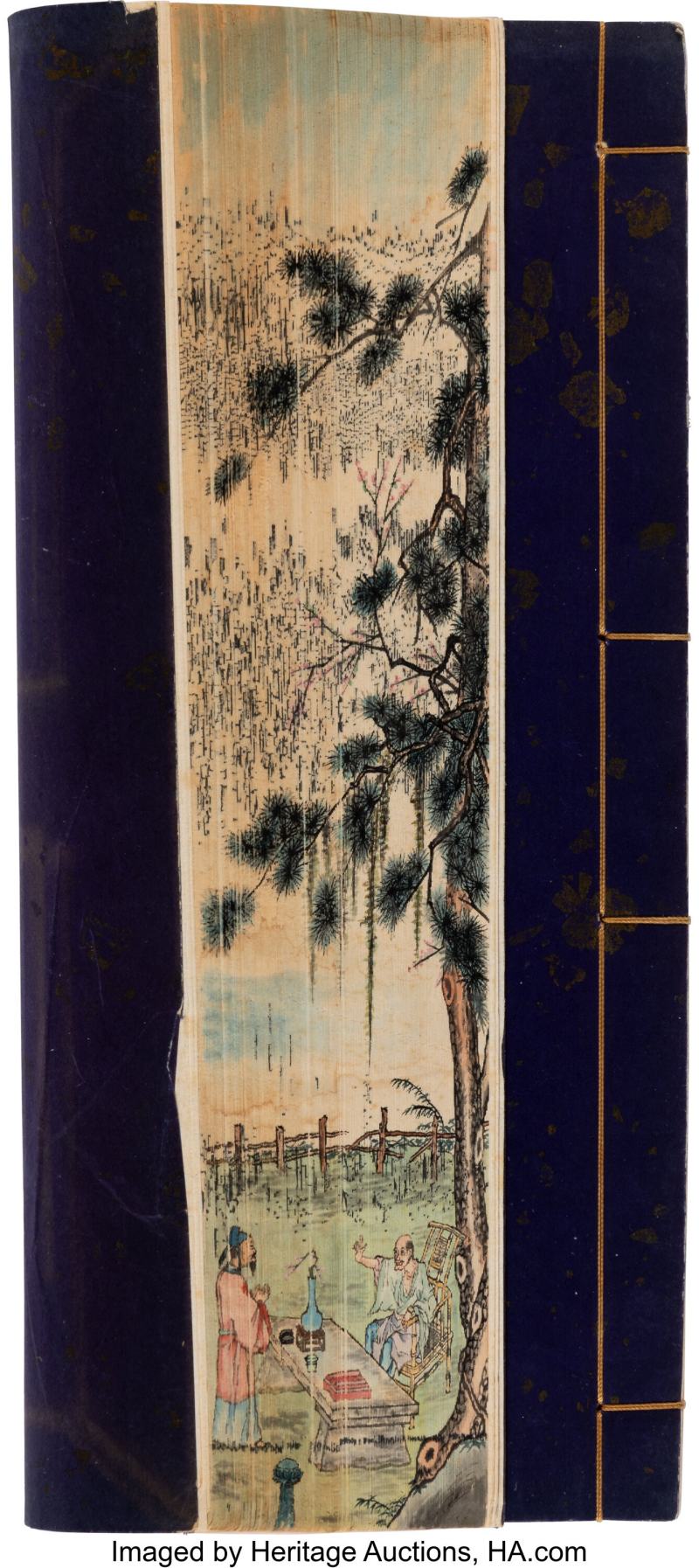
The fore-edge of this volume is decorated with a painting by the renowned artist Lu Hongnian (1919-1987). Lu Hongnian was a native of Taicang, Jiangsu Province. He studied landscape painting under Li Zhichao before attending the Department of Fine Arts at Fu Jen Catholic University, where he later remained as an instructor. In 1937, he was appointed a researcher at the Chinese Painting Research Institute of the National Peiping Antiquities Museum and subsequently studied under Huang Binhong. After 1949, he served as Lecturer and Associate Professor in the Department of Chinese Painting at the Central Academy of Fine Arts. He specialized in finely executed gongbi figure painting in rich colors and was especially renowned for his depictions of Christian and biblical subjects.
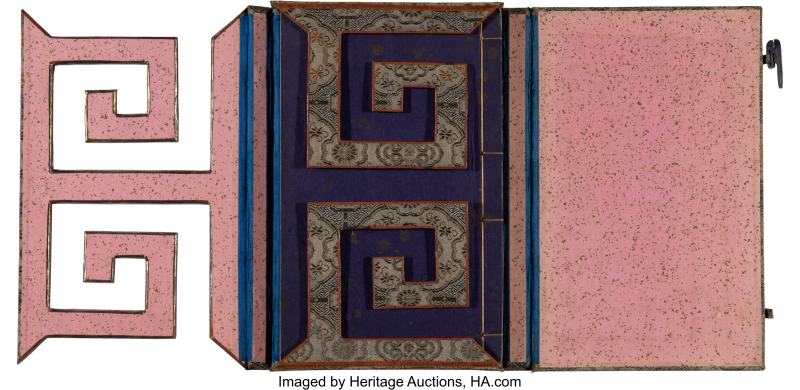
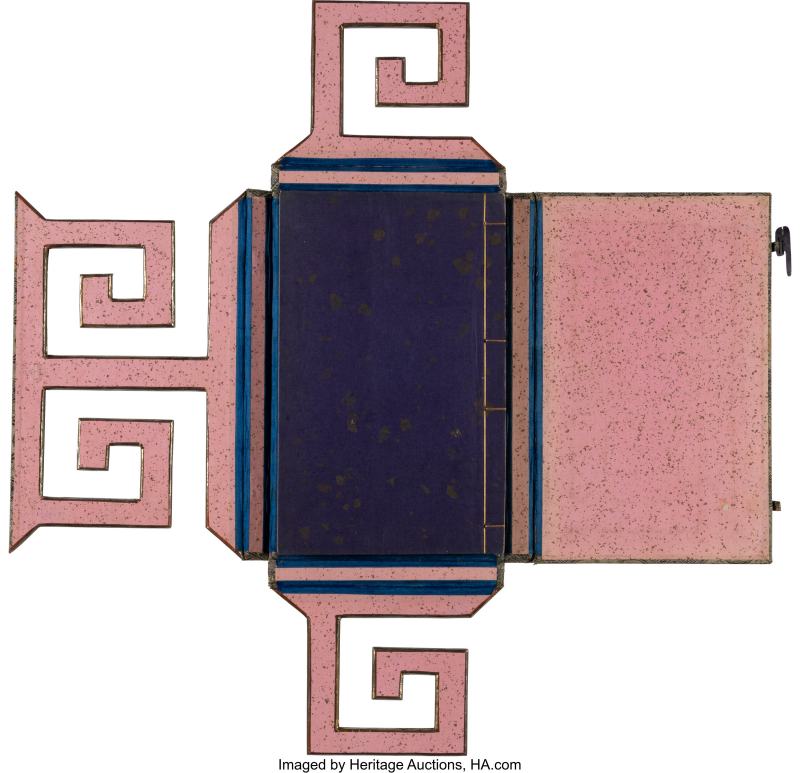
Fore-edge painting is a Western decorative technique that was introduced by Dr. William Bacon Pettus (1880-1959), an American teacher in Peking, and adapted by Chinese booksellers during the Republic period (1912-1949). They would take incomplete sets of Ming-dynasty books and commission artists to paint Christian figures, landscapes, or floral compositions on the fore-edge. The finished books were then housed in finely made brocade-covered cases and sold to the Western market. This work depicts a conversation between Yao Shan and Li Hsiang in an outdoor setting under a pine tree.
Since the late twentieth century, this small group of Ming editions with fore-edge paintings were discovered in the American market. Owing to their highly specialized nature, they remain little known among Chinese collectors.
These works enhance the collectible appeal of the books through their distinctive decoration while remaining exceptionally rare. Fewer than several dozen examples of Chinese rare books with fore-edge paintings are known to survive. As such, they provide tangible evidence of cultural exchange between China and the West, while also serving as valuable material for the study of bookbinding, decorative arts, and the localization of Christian iconography in China.
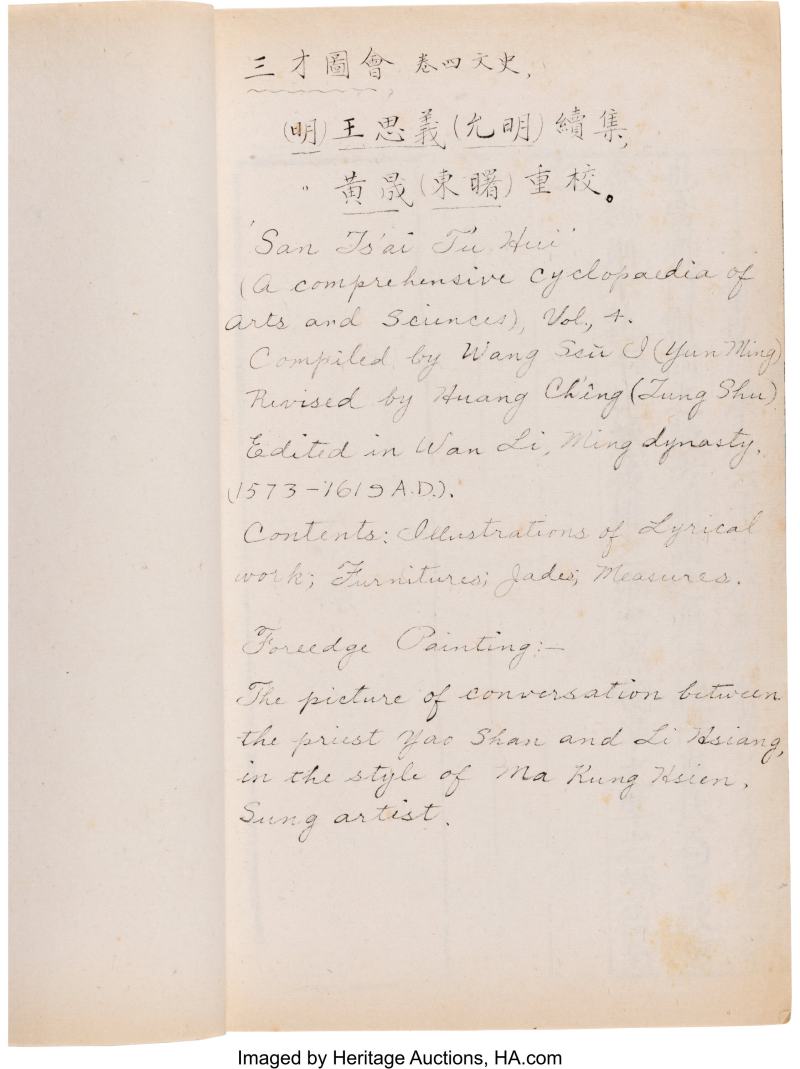
The Sancai Tuhui (三才圖會; Collected Illustrations of the Three Realms) is a richly illustrated Chinese encyclopedia compiled by the scholar Wang Qi (who obtained the jinshi degree in 1565) together with his son Wang Siyi during the late Ming dynasty. Completed in 1607 and first published in 1609, the work comprises 106 chapters arranged into fourteen thematic categories. Conceived as a comprehensive survey of the "three realms" of Heaven, Earth, and Humanity, it encompasses a wide range of subjects, including astronomy, geography, human anatomy, agriculture, costume, ritual, animals, plants, and implements.
以下内容由AI翻译:
【名称】
传陆鸿年(中国,1919-1989),《三才图会》一卷,带前缘画
【描述】
水墨纸本
此书卷的前缘装饰有著名艺术家陆鸿年的绘画。陆鸿年是江苏太仓人,曾师从李志超学习山水画,后进入辅仁大学美术系,并留校任教。1937年,他被任命为国立北平古物陈列所中国画研究所研究员,并随后师从黄宾虹。1949年后,他在中央美术学院中国画系担任讲师和副教授。他擅长精细的工笔人物画,尤其以描绘基督教和圣经题材而闻名。
前缘画是一种西方装饰技术,由美国教师威廉·培根·佩特斯博士(1880-1959)引入北京,并在民国时期(1912-1949)被中国书商采用。他们会选取不完整的明代书籍集,并委托艺术家在前缘绘制基督教人物、风景或花卉图案。完成后,这些书籍会被装入精美的锦缎封面盒中,销往西方市场。这幅作品描绘了姚山和李翔在松树下的户外对话。
自20世纪末以来,这批带有前缘画的明代版本在美国市场上被发现。由于其高度的专业性,它们在中国收藏家中仍然鲜为人知。
这些作品通过独特的装饰增强了书籍的收藏价值,同时极为罕见。已知存世的带有前缘画的中国珍本书籍不到几十册。因此,它们提供了中西文化交流的具体证据,同时也为研究书籍装帧、装饰艺术以及基督教图像在中国的本土化提供了宝贵的材料。
《三才图会》是一部由学者王圻(1565年进士)和他的儿子王思义在晚明时期编纂的插图丰富的百科全书。该书于1607年完成,1609年首次出版,共106章,分为14个主题类别。它旨在全面概述“天、地、人”三个领域,涵盖了包括天文、地理、人体解剖、农业、服饰、礼仪、动物、植物和器具等广泛的主题。
【品相】
可提供状况报告。
The fore-edge of this volume is decorated with a painting by the renowned artist Lu Hongnian (1919-1987). Lu Hongnian was a native of Taicang, Jiangsu Province. He studied landscape painting under Li Zhichao before attending the Department of Fine Arts at Fu Jen Catholic University, where he later remained as an instructor. In 1937, he was appointed a researcher at the Chinese Painting Research Institute of the National Peiping Antiquities Museum and subsequently studied under Huang Binhong. After 1949, he served as Lecturer and Associate Professor in the Department of Chinese Painting at the Central Academy of Fine Arts. He specialized in finely executed gongbi figure painting in rich colors and was especially renowned for his depictions of Christian and biblical subjects.
Fore-edge painting is a Western decorative technique that was introduced by Dr. William Bacon Pettus (1880-1959), an American teacher in Peking, and adapted by Chinese booksellers during the Republic period (1912-1949). They would take incomplete sets of Ming-dynasty books and commission artists to paint Christian figures, landscapes, or floral compositions on the fore-edge. The finished books were then housed in finely made brocade-covered cases and sold to the Western market. This work depicts a conversation between Yao Shan and Li Hsiang in an outdoor setting under a pine tree.
Since the late twentieth century, this small group of Ming editions with fore-edge paintings were discovered in the American market. Owing to their highly specialized nature, they remain little known among Chinese collectors.
These works enhance the collectible appeal of the books through their distinctive decoration while remaining exceptionally rare. Fewer than several dozen examples of Chinese rare books with fore-edge paintings are known to survive. As such, they provide tangible evidence of cultural exchange between China and the West, while also serving as valuable material for the study of bookbinding, decorative arts, and the localization of Christian iconography in China.
The Sancai Tuhui (三才圖會; Collected Illustrations of the Three Realms) is a richly illustrated Chinese encyclopedia compiled by the scholar Wang Qi (who obtained the jinshi degree in 1565) together with his son Wang Siyi during the late Ming dynasty. Completed in 1607 and first published in 1609, the work comprises 106 chapters arranged into fourteen thematic categories. Conceived as a comprehensive survey of the "three realms" of Heaven, Earth, and Humanity, it encompasses a wide range of subjects, including astronomy, geography, human anatomy, agriculture, costume, ritual, animals, plants, and implements.
以下内容由AI翻译:
【名称】
传陆鸿年(中国,1919-1989),《三才图会》一卷,带前缘画
【描述】
水墨纸本
此书卷的前缘装饰有著名艺术家陆鸿年的绘画。陆鸿年是江苏太仓人,曾师从李志超学习山水画,后进入辅仁大学美术系,并留校任教。1937年,他被任命为国立北平古物陈列所中国画研究所研究员,并随后师从黄宾虹。1949年后,他在中央美术学院中国画系担任讲师和副教授。他擅长精细的工笔人物画,尤其以描绘基督教和圣经题材而闻名。
前缘画是一种西方装饰技术,由美国教师威廉·培根·佩特斯博士(1880-1959)引入北京,并在民国时期(1912-1949)被中国书商采用。他们会选取不完整的明代书籍集,并委托艺术家在前缘绘制基督教人物、风景或花卉图案。完成后,这些书籍会被装入精美的锦缎封面盒中,销往西方市场。这幅作品描绘了姚山和李翔在松树下的户外对话。
自20世纪末以来,这批带有前缘画的明代版本在美国市场上被发现。由于其高度的专业性,它们在中国收藏家中仍然鲜为人知。
这些作品通过独特的装饰增强了书籍的收藏价值,同时极为罕见。已知存世的带有前缘画的中国珍本书籍不到几十册。因此,它们提供了中西文化交流的具体证据,同时也为研究书籍装帧、装饰艺术以及基督教图像在中国的本土化提供了宝贵的材料。
《三才图会》是一部由学者王圻(1565年进士)和他的儿子王思义在晚明时期编纂的插图丰富的百科全书。该书于1607年完成,1609年首次出版,共106章,分为14个主题类别。它旨在全面概述“天、地、人”三个领域,涵盖了包括天文、地理、人体解剖、农业、服饰、礼仪、动物、植物和器具等广泛的主题。
【品相】
可提供状况报告。
常见问题
拍品的品相状况如何?
Condition report available upon request.
拍品的尺寸是多少?
10-3/4 x 6-7/8 x 1 inches (27.3 x 17.5 x 2.5 cm) (overall)