
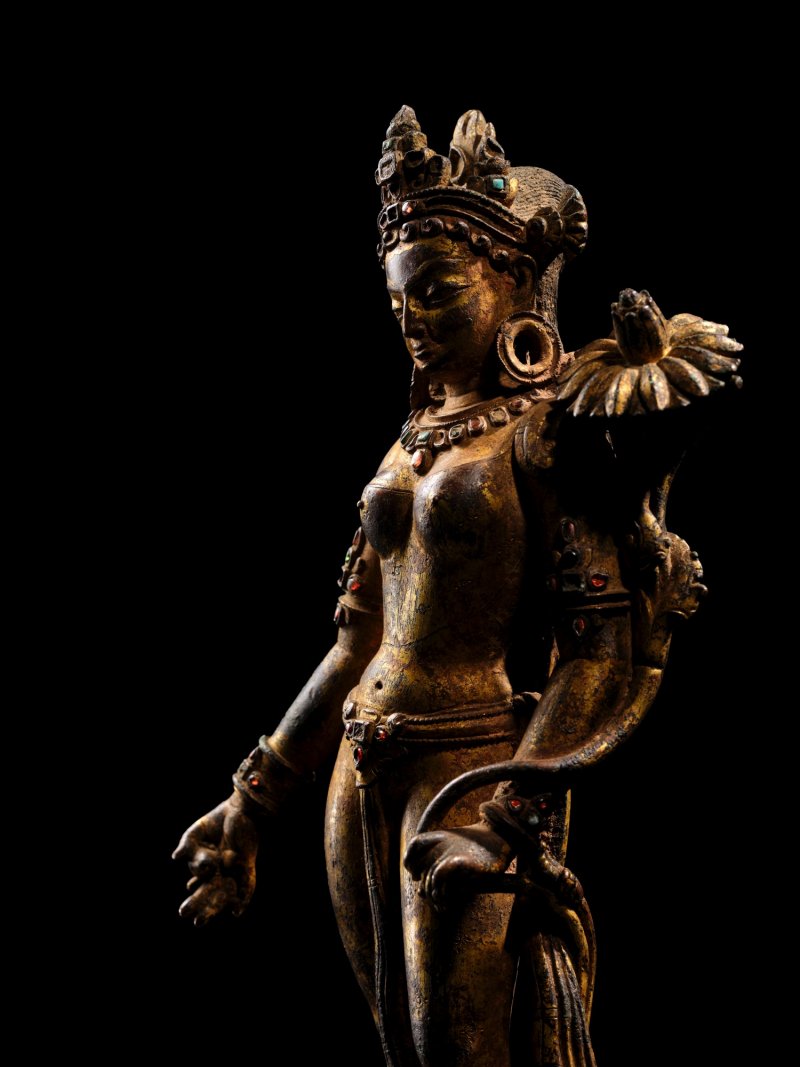
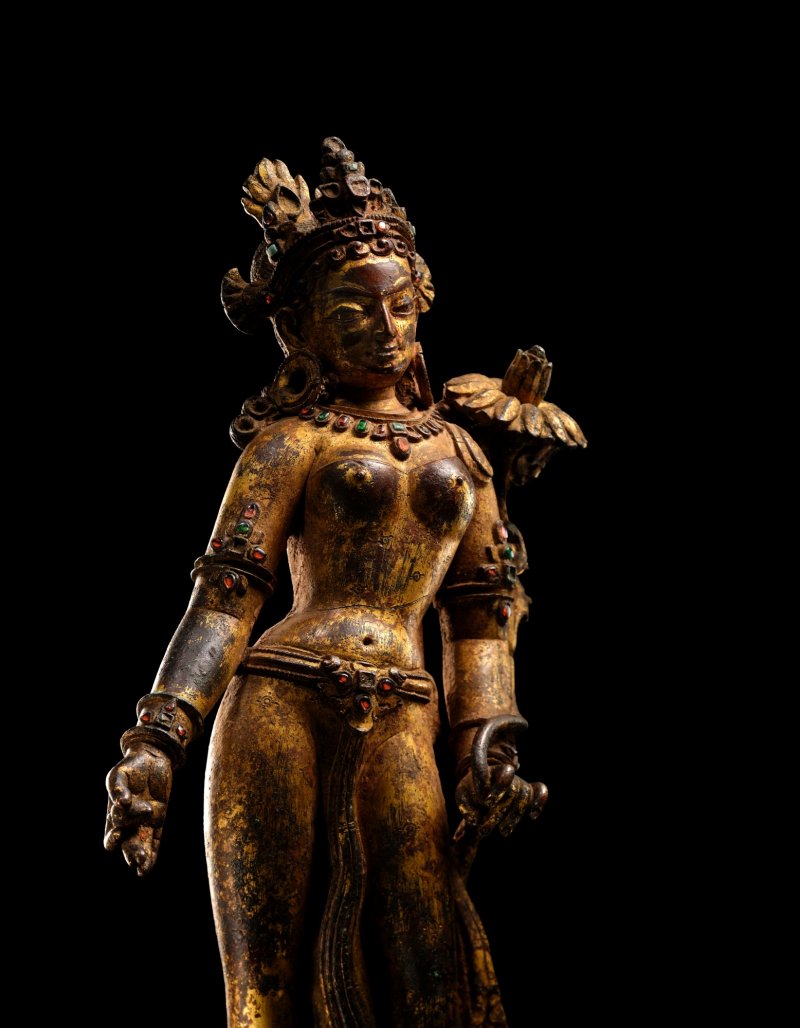

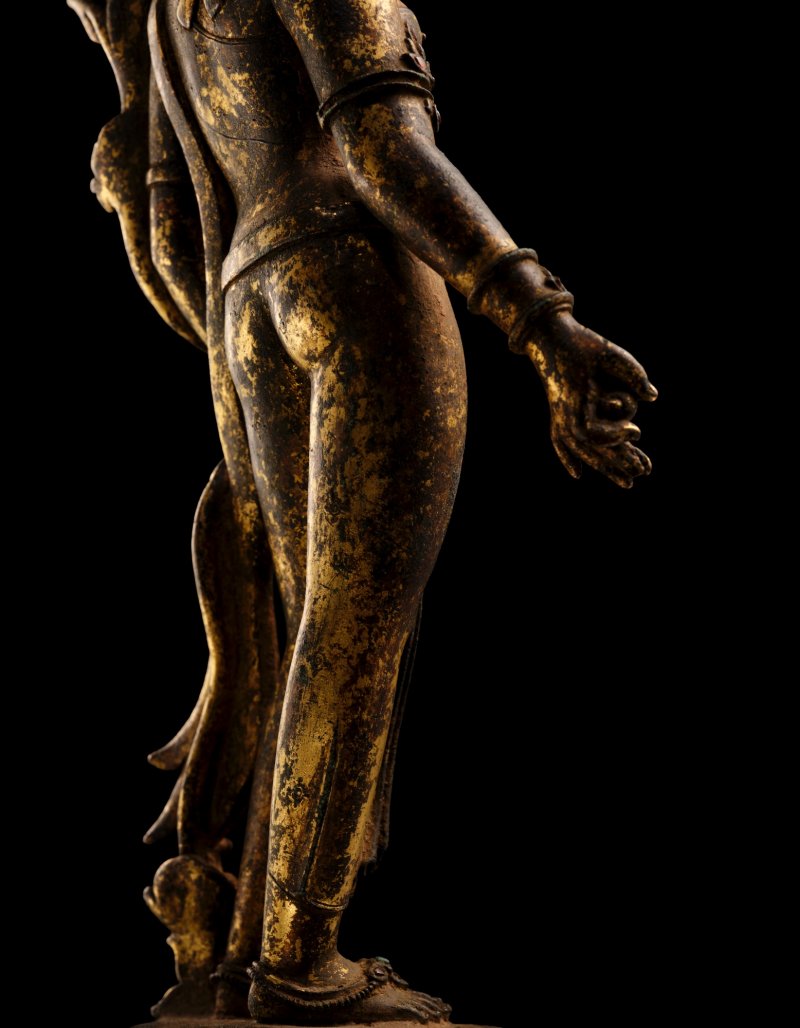
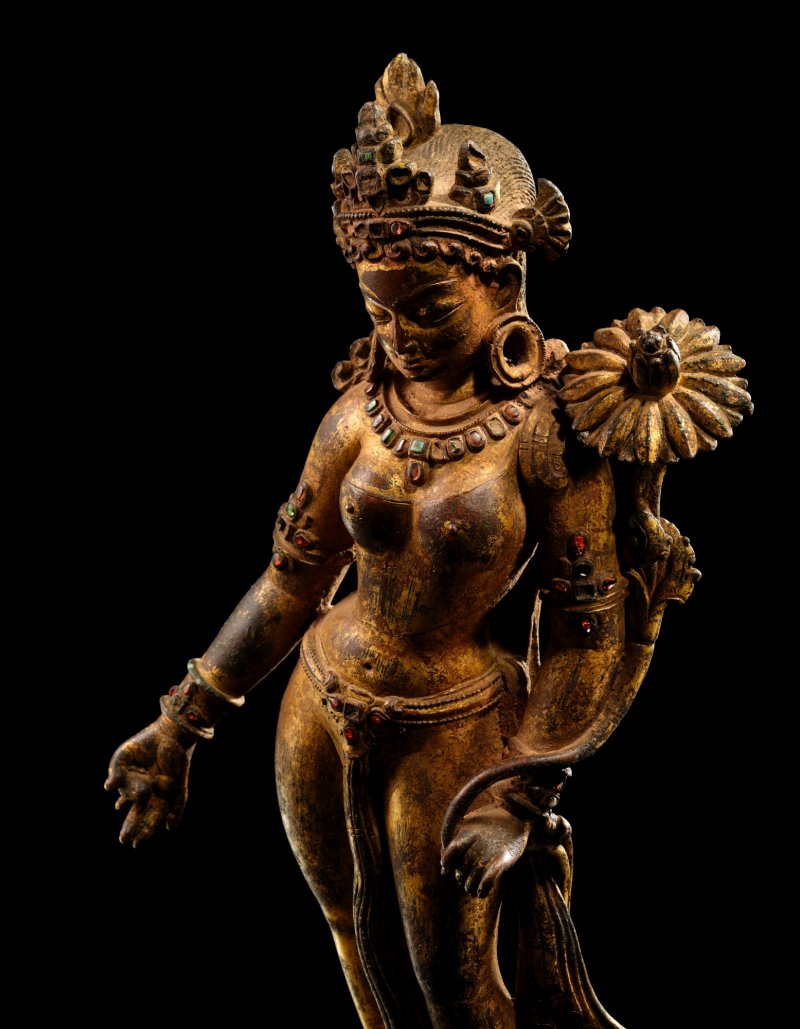
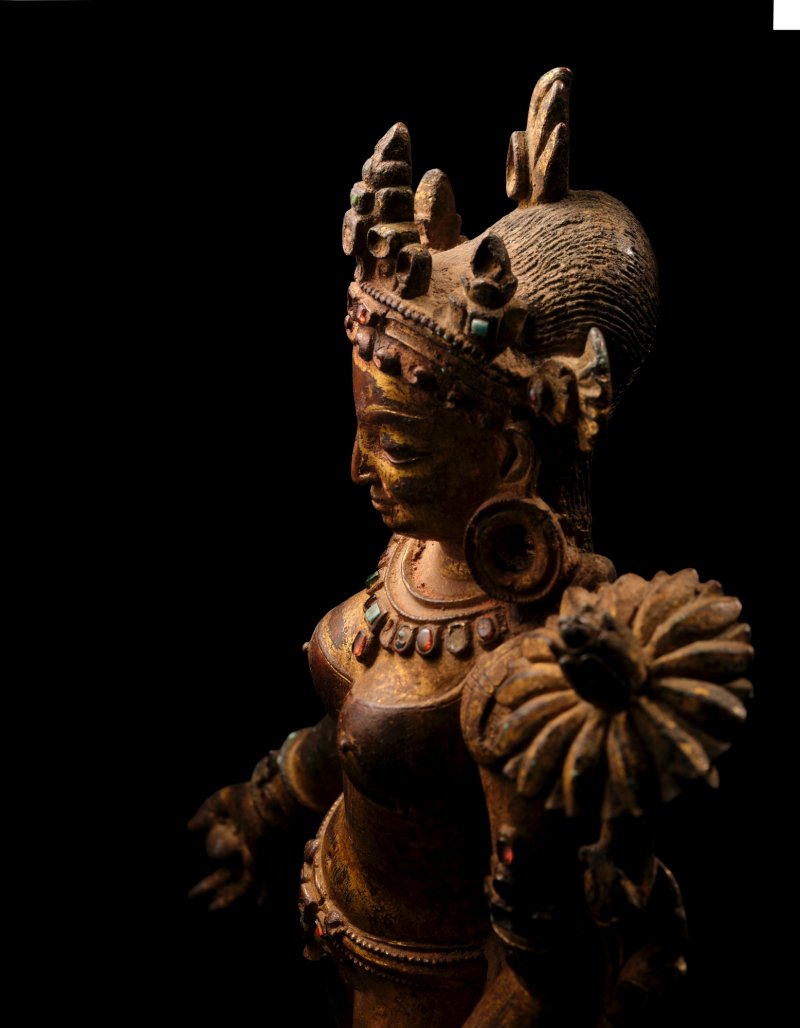
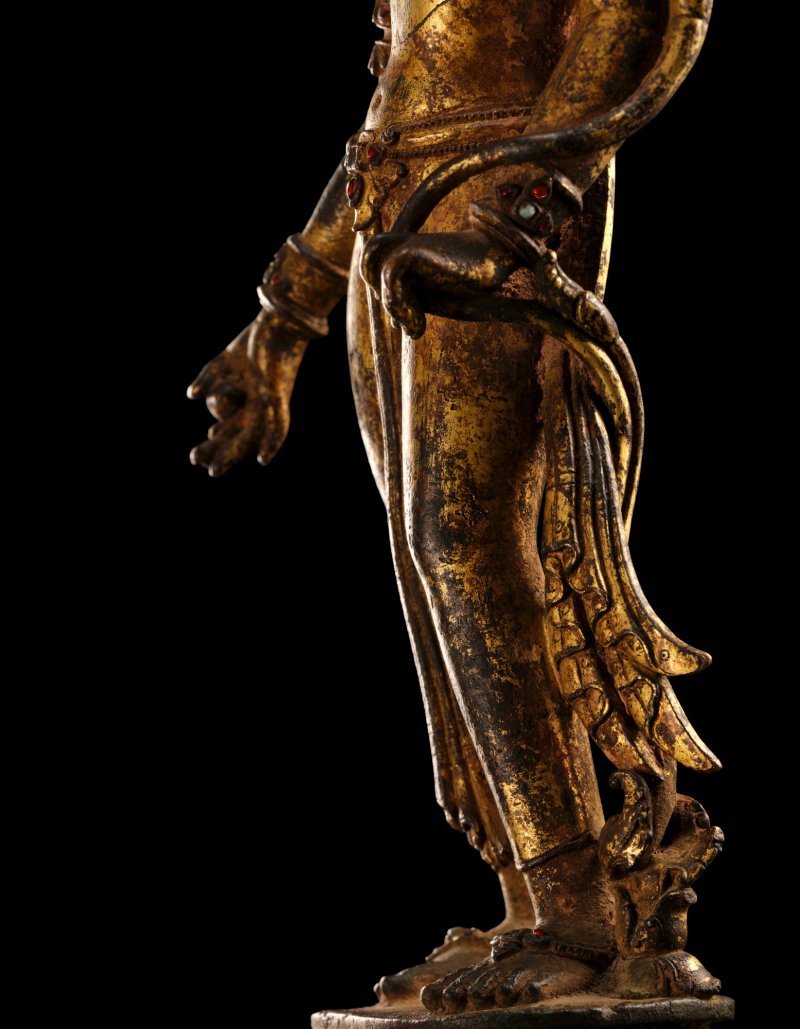
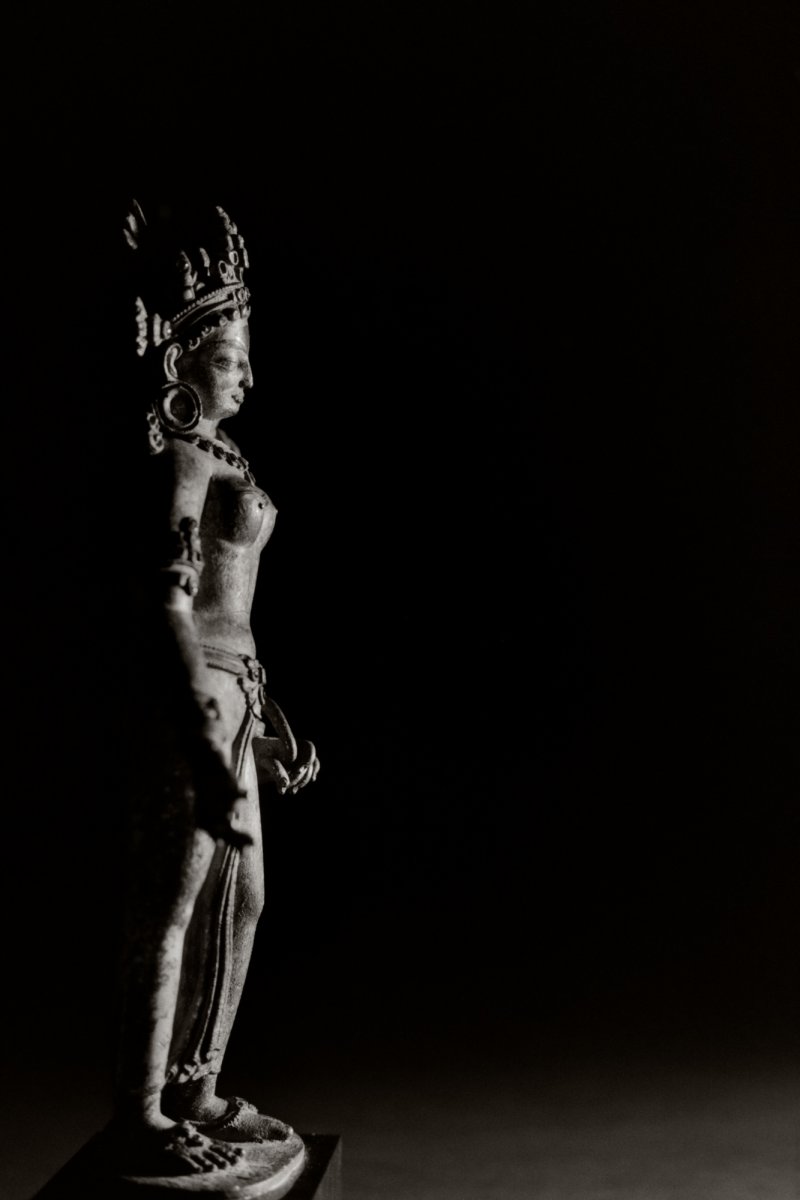
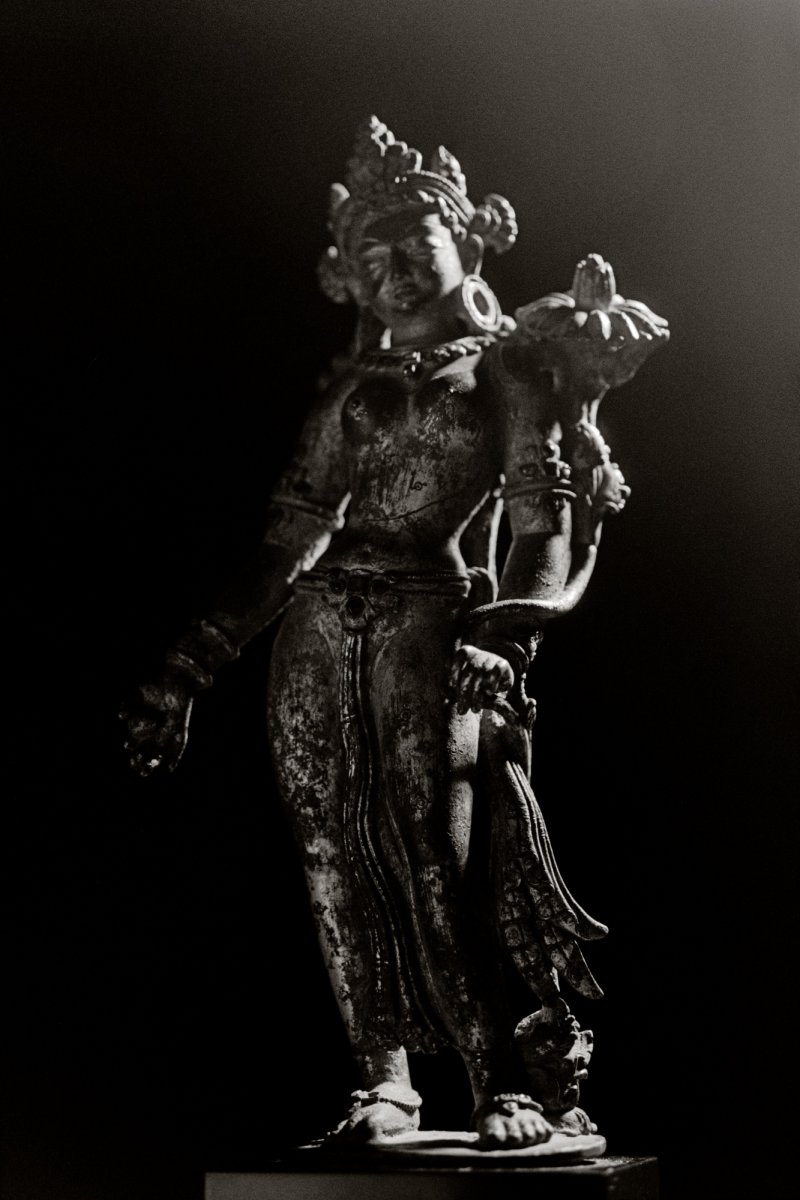
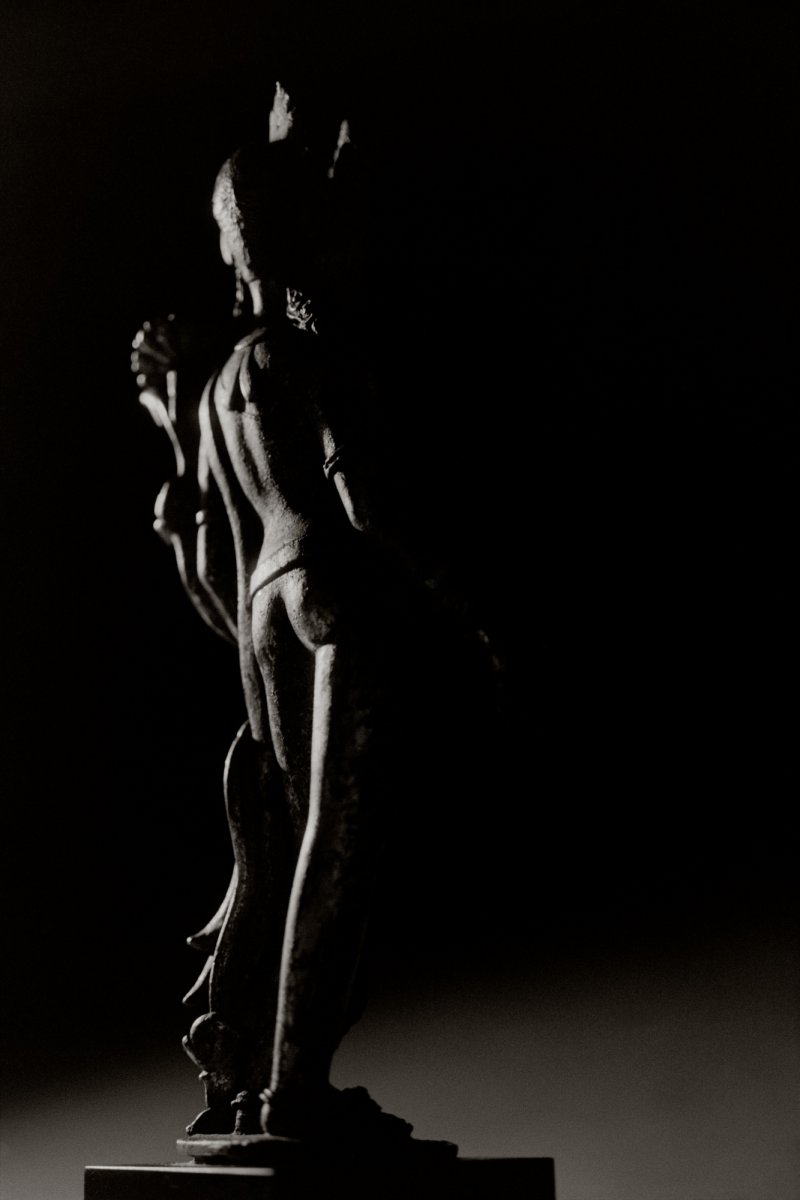
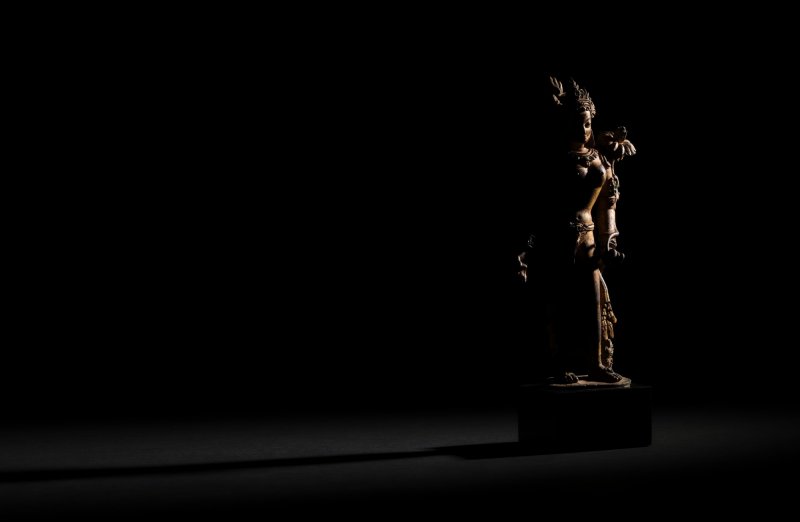
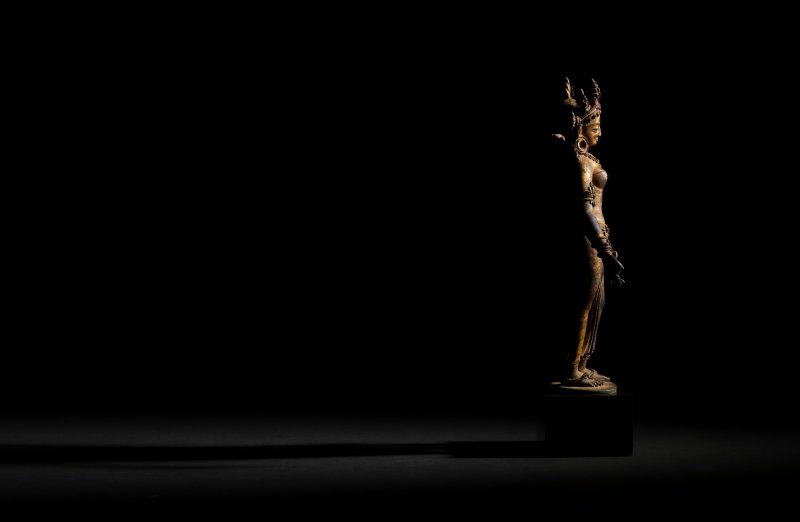
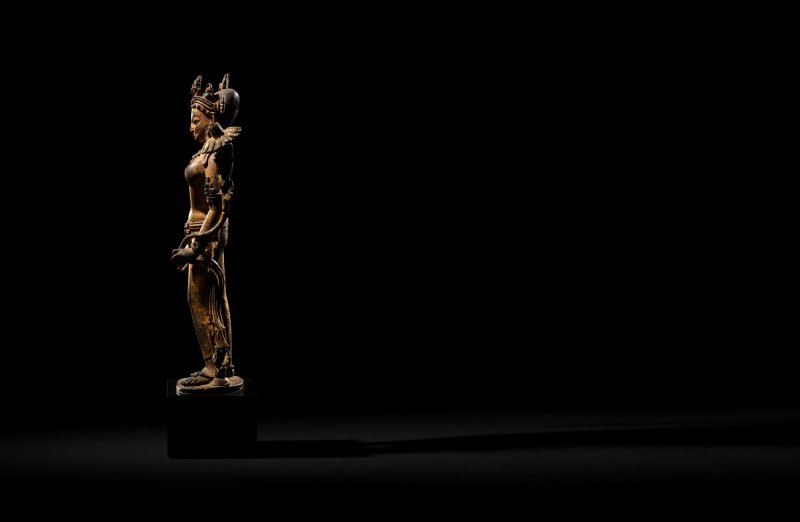
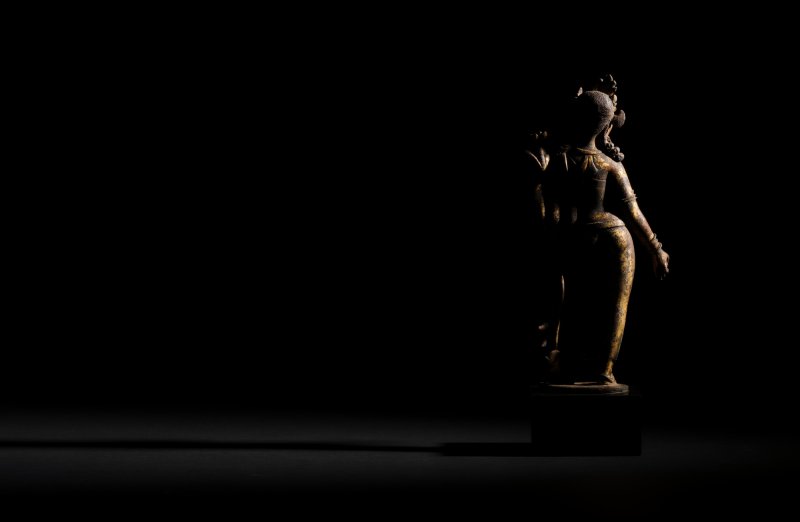
Lot 9501 An exceptional gilt-copper figure of Tara, Nepal, 13th century | 十三世紀 尼泊爾 銅鎏金度母立像
落槌价
预展中
成交价
预展中
| 拍卖公司 | 苏富比 |
|---|---|
| 拍卖时间 | 2026年10月30日 |
拍品信息
拍品名称
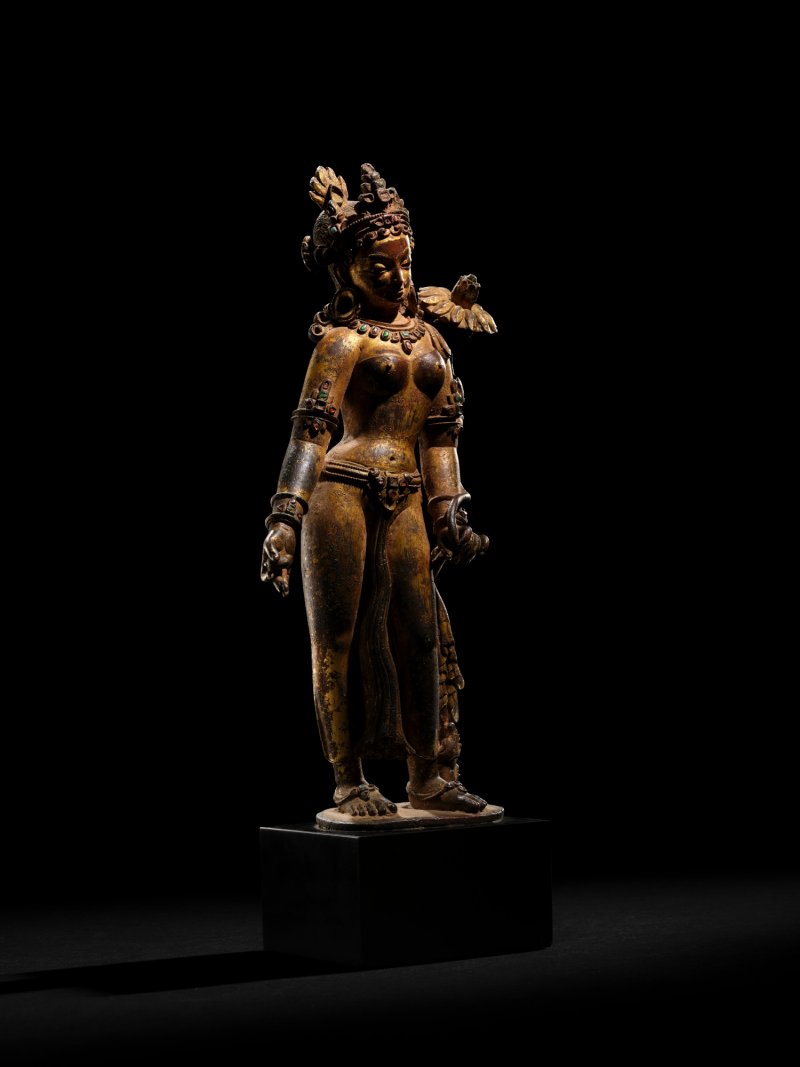
An exceptional gilt-copper figure of Tara, Nepal, 13th century | 十三世紀 尼泊爾 銅鎏金度母立像
起拍价
HKD 14,000,000
估值区间
14,000,000 - 28,000,000 HKD
尺寸
未知
品相
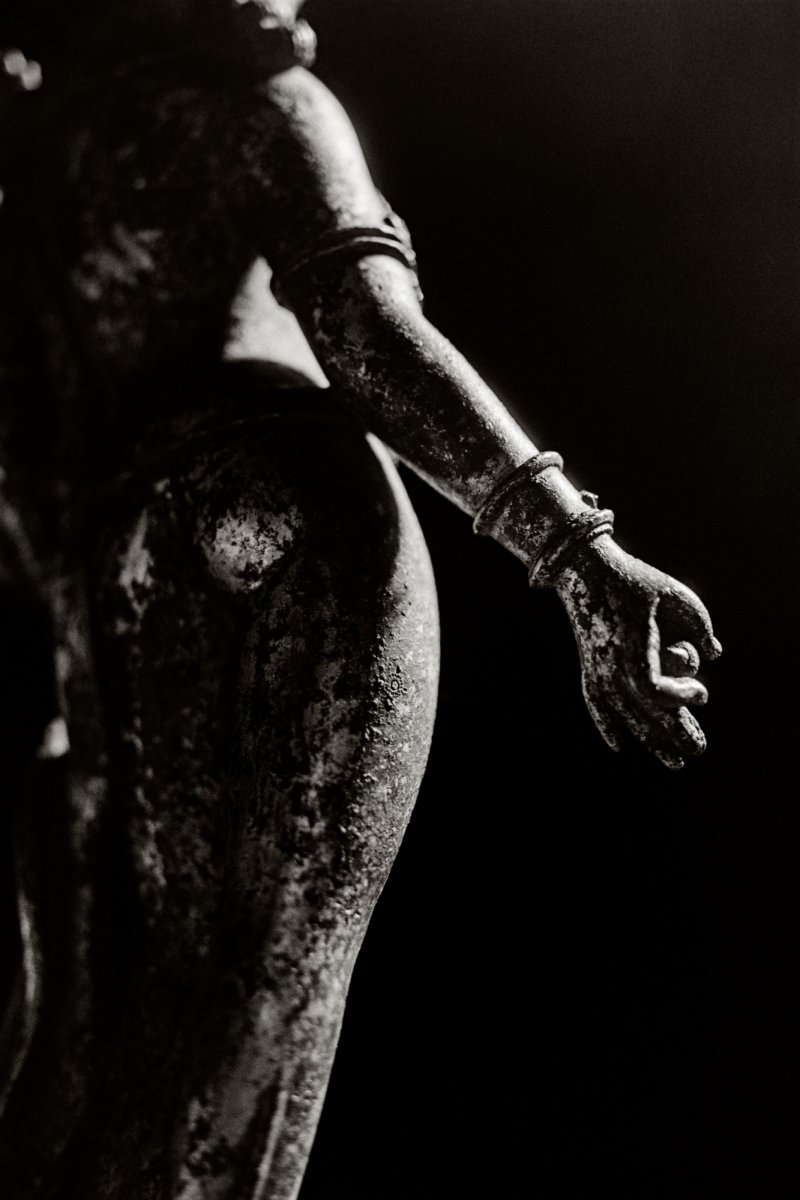
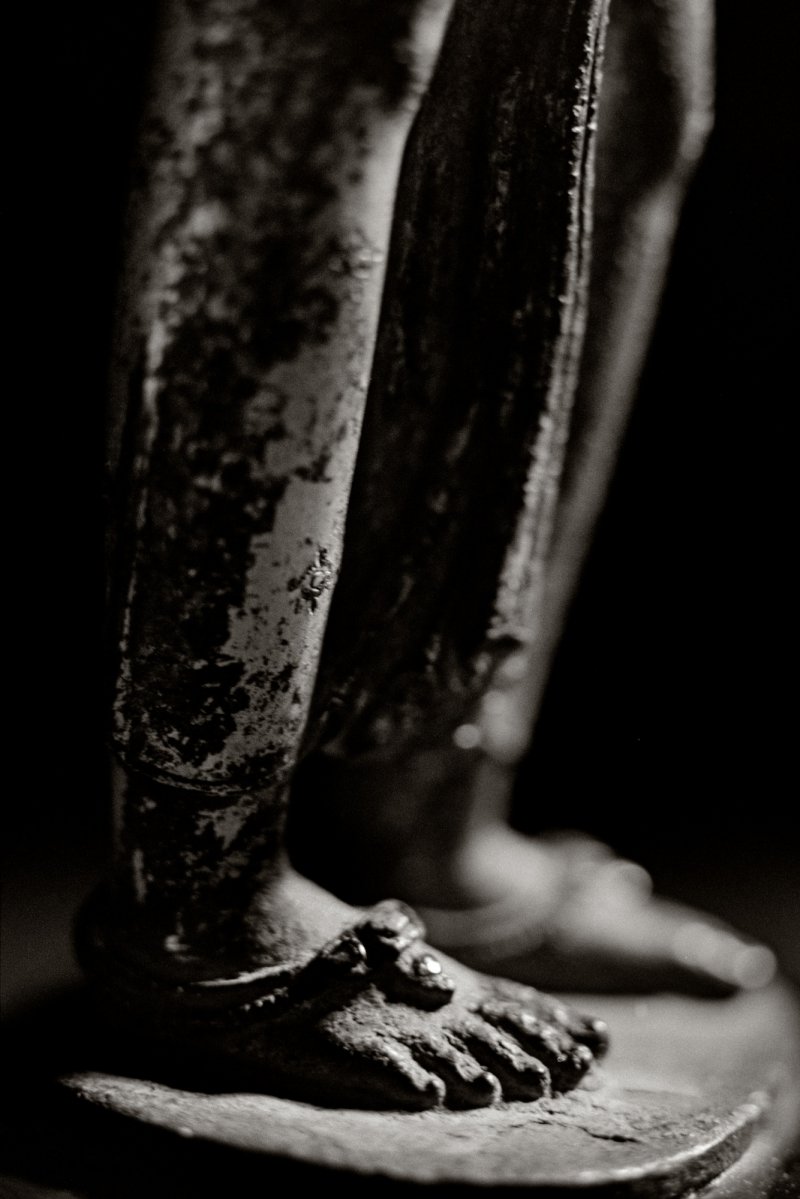
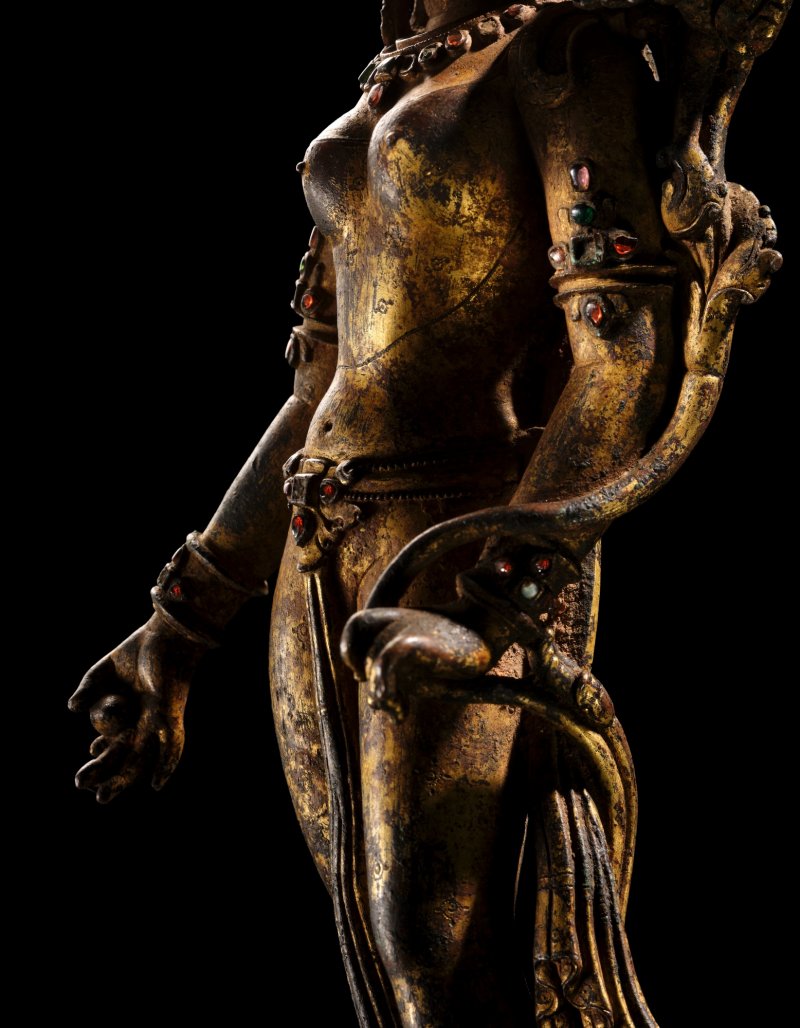
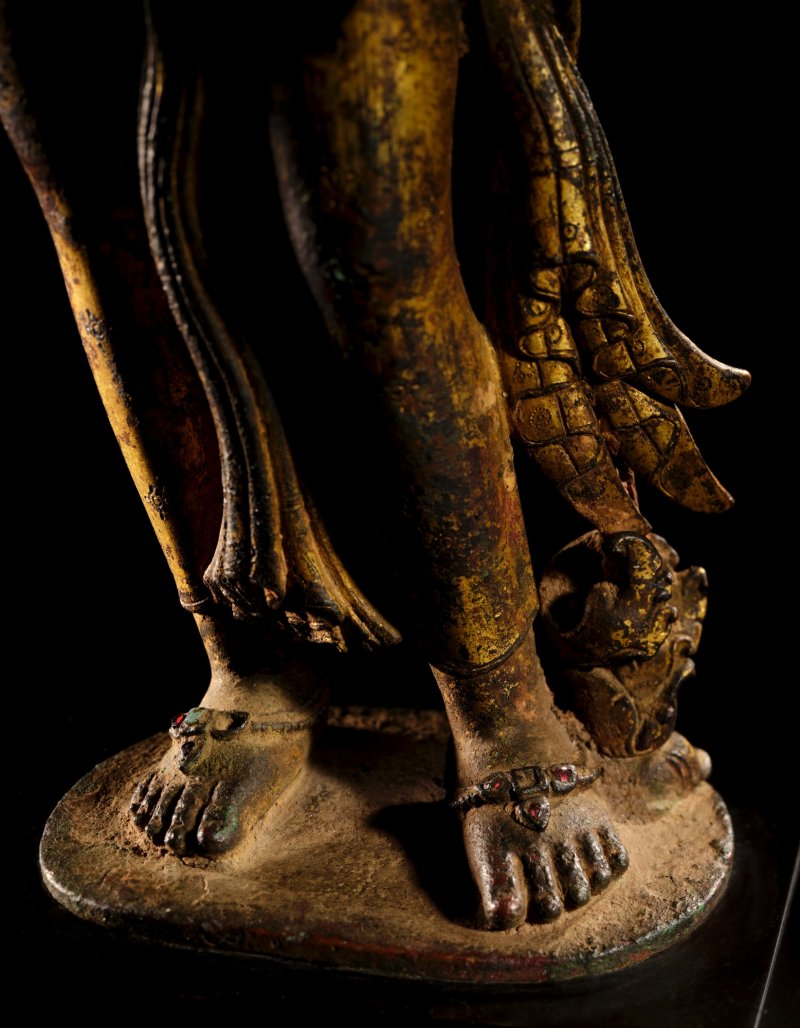
The figure is in superb overall condition, completely untouched and has not been cleaned, retaining a pristine patina and exceptionally rich gilding, rarely seen in such condition on the market. Finely cast and chased, it has minor expected wear, particularly to the face and breasts, revealing the rich coppery alloy beneath. A few small inlays are missing, as is typical for a figure of this type and age.
整體品相極佳。造像未經清理,皮殼及鎏金保存極佳,殊為難得。面胸鎏金因長年供奉摩挲,漸顯溫潤銅胎。少許嵌寶見缺,均屬正常。
If a condition report is provided to assist you with assessing the condition of the lot, it is for guidance purposes only. Such condition report may not refer to all faults, restoration, alterations, or adaptations because Sotheby's is not a professional conservator or restorer but rather a condition report is a statement of subjective, qualified opinion genuinely held by Sotheby's. For these reasons, any such condition report is not an alternative to taking your own professional advice regarding the condition of the lot. Prospective buyers should also refer to the Guide for Buyers at Auction which includes important notices concerning the type of property in this sale.
更多信息
23.5 cm
Himalayan Art Resources (HAR) item no. 204703
喜馬拉雅藝術資源編號204703
来源:Jean-Claude Moreau-Gobard, Paris.
A Paris private collection, acquired from the above prior to 1966.
Sotheby’s Paris, 16th December 2015, lot 73 and cover.
图录
说明:來源
Jean-Claude Moreau-Gobard,巴黎
巴黎私人收藏,1966年以前購於上述來源
巴黎蘇富比2015年12月16日,編號73及封面
The sensuous quality of Newar sculpture is encapsulated in bronzes of the gods and goddesses of Nepal depicted standing in subtly flexed tribhanga, such as this rare gilt copper Tara. This Nepalese sculptural tradition is rooted in the Kathmandu Valley and dates from at least the seventh century, see Licchavi (ca 400-879) bronzes in Stanislaw Czuma, Indian Art from the George P. Bickford Collection, Cleveland Museum of Art, Cleveland, 1975, pls. 26 and 27. The sophisticated casting, gilding and attention to naturalistic detail in this early Malla (ca 1200–1482) example epitomise the very essence of the finest Nepalese sculpture of the period. Newars, the indigenous people of the Kathmandu Valley, cast primarily in pure copper giving a characteristic warmth to the gilding and to the exposed areas of metal where the gold is rubbed. The inlaid jewel settings are typical of the Newar preference for subtle colour combinations of garnet and pastel glass.
The elegant, expansive posture and subtly downcast countenance embody the compassionate nature of the goddess Tara as Buddhist Saviour. The goddess is portrayed with a diaphanous bodice and sheer lower garment clinging to the youthful form: religious texts specify that the representation of a goddess be made in the image of a sixteenth-year-old maiden, cf. the youthful form and stylistic similarities of a thirteenth century Nepalese standing gilt copper Tara in a private collection, see Ulrich von Schroeder, Indo-Tibetan Bronzes, Hong Kong, 1981, pl. 88F.
Nepalese gilt bronzes depicting the goddess Tara are relatively rare compared with the renowned sculptures of Padmapani Avalokiteshvara, the predominant iconography of standing sculpture in the early Malla period. The Tara and the majority of the Padmapani Avalokiteshvara examples are portrayed with similar tribhanga posture and mudras, with the left hand holding the stem of a lotus flower, padma. Indeed Tara is considered to be a manifestation of Avalokiteshvara and is conceived by Buddhist practitioners as emerging from a white lotus bud on a lake formed from a tear shed by the bodhisattva over the suffering of sentient beings. Tara is worshipped by Buddhists to alleviate suffering and is especially invoked by travellers for protection.
It was during the thirteenth century, the period of this exceptional sculpture, that Nepal’s most celebrated artist Aniko (1244–1306) was called to Tibet and commissioned by the Sakya hierarch Phagspa (1235–1280). The Tara exemplifies the style and quality of Buddhist art with which Aniko would have been intimately familiar in his native Kathmandu Valley, and which was in turn admired and sought by Tibetan, and eventually Chinese, patrons. Phagspa introduced Aniko to Kublai Khan (1215–1294) in 1262, and by 1278 the artist had been appointed controller of the Yuan imperial workshops. Newar artists continued to be highly regarded in the imperial ateliers throughout the Yuan, Ming and Qing dynasties.
紐瓦爾雕塑之曼妙韻致,於尼泊爾神祇銅像之微屈三折枝式站姿中展露無遺,此尊珍罕銅鎏金度母像即為佳例。此尼泊爾雕塑傳統源自加德滿都谷地,其歷史至少可追溯至七世紀,參考李查維(約400-879年)時期銅像,載於 Stanislaw Czuma,《Indian Art from the George P. Bickford Collection》,克利夫蘭藝術博物館,1975年,圖版26及27。本品屬馬拉王朝早期(約1200-1482年)之作,其鑄造精湛、鎏金華美,且極具寫實細節,完美體現該時期尼泊爾頂級雕塑之精髓。加德滿都谷地原住民紐瓦爾人主要以純銅鑄造,使鎏金及因磨損而露出之金屬表面散發出獨特的溫潤光澤。造像再嵌以寶石,展現紐瓦爾人偏好以石榴石與柔和色調玻璃作微妙色彩搭配之典型風格。
度母姿態優雅舒展,面容微俯,展現其作為佛教救度者之慈悲本性。度母身披透薄天衣,下裙輕貼其青春豐盈之軀:宗教典籍記載,女神造像應以十六歲少女之姿呈現。比較一私人收藏十三世紀尼泊爾銅鎏金度母立像,其青春體態與風格特徵與本品相近,見 Ulrich von Schroeder,《Indo-Tibetan Bronzes》,香港,1981年,圖版88F。
相比於馬拉王朝早期盛行之蓮華手觀音立像,尼泊爾銅鎏金度母像相對罕見。本度母像與多數蓮華手觀音像均呈相近之三折枝式站姿及手印,左手持蓮花莖。事實上,度母被視為觀世音菩薩之化身,佛教徒認為觀音菩薩因悲憫眾生受苦而落淚,淚水化作湖泊,度母便從湖中一朵白蓮苞中化生而出。佛教徒敬拜度母以求拔除痛苦,行者旅人亦多祈求度母庇佑平安。
本尊造像製於十三世紀,正值尼泊爾最著名之藝術家阿尼哥(1244-1306年)受薩迦派法王八思巴(1235-1280年)之邀前往西藏並受其委託之時期。此度母像展現之佛教藝術風格與卓越品質,正是阿尼哥於其故鄉加德滿都谷地所熟稔者,此風格其後亦深受西藏及內地功德主之青睞與追捧。1262年,八思巴將阿尼哥引薦予忽必烈(1215-1294年),至1278年,阿尼哥獲任命為元朝宮廷御用匠師總管。終元、明、清三代,紐瓦爾藝術家在宮廷造辦處中始終備受尊崇。
------------------------------------------------------------
Bliss and Compassion:
Three Buddhist Treasures from a Private Collection
The Three Buddhist Treasures presented here emanate from a collection of extraordinary scope and quality, formed by a connoisseur with an eye for the truly unique and beautiful. Each of these treasures was created not only as a work of art, but as a sacred instrument of meditation, ritual practice, and the pursuit of enlightenment, encapsulating the profound transmission of the iconography, esoteric beauty and ritual power of Himalayan Buddhist art from the Kathmandu Valley to the court of the Yongle Emperor.
The sensuous movement and exceptional sculptural quality of the Tara embody the height of quality achieved in thirteenth century Nepal, from where Aniko emerged as the greatest of all Nepal’s artists, and travelled to the court of Kublai Khan in Beijing and became Controller of the Imperial Workshops. The magnificence and intricacy of the gold and silver-inlaid iron ritual sceptre, the khatvanga, encapsulates the complexity of the esoteric iconography introduced to the early Ming emperors. To hold the khatvanga is to signify that the adept has cut through ignorance and gained mastery of the yogic subtle nervous system, transmuting compassion to a state of bliss and awareness of clear reality.
The exquisite gilt figure of Raktayamari and Vajravetali represents the fulfilment of this transmission, and the apex of quality achieved at the Yongle court. Created as a miniature sculpture for private meditation, the ecstatic union of male and female energies articulates the triumph of wisdom over ignorance. These Three Treasures are of truly unparalleled quality, ranking alongside the greatest extant examples preserved in any museum or temple collection. Their presence here is a unique opportunity for collectors and practitioners to be the next custodian of a sacred and profound tradition.
大樂與慈悲
重要私人珍藏佛教珍品三件
是次恭呈佛教瑰寶,乃一位鑒藏雅士虔心所集、多年護持之珍藏。藏家慧眼獨具,庋藏之富、品第之粹,皆屬非凡。茲選三珍,乃佛藝極致,更為助成戒、定、慧三學之殊勝法物。自加德滿都谷地,至永樂御廷,法相之邃、密法之奧、儀軌之肅,皆於此圓滿具足。
銅鎏金度母立像,姿態柔曼,靈韻盎然,堪為十三世紀尼泊爾工藝之秀絕。此尊佛母與藝師阿尼哥同源同土,其乃尼婆羅藝匠之冠,後隨帝師八思巴入元大都,偕藏尼金工及佛像式樣入華,開佛藝新風。
明永樂鐵鋄金銀喀章嘎天杖,莊嚴宏麗。天杖者,樂空雙運之表,菩提心寓焉。其三頭顱,斷貪、瞋、癡三毒。頂端金剛杵,照見佛智。執此杵者,無明已斷,脈氣明點通達,轉慈悲為大樂,照見實相。
明永樂銅鎏金紅閻摩敵與金剛亥母造像,形制尤巧,堪為永樂宮廷工藝之至境。紅閻摩敵乃文殊菩薩化現,一手舞天杖,一手持骷髏碗,懷抱明妃金剛亥母,表悲智雙運、樂空無二。
三珍並現,品第超絕,堪與中外名館、寺觀所藏最上乘者齊觀。因緣殊勝,世所難遇。
常见问题
这件An exceptional gilt-copper figure of Tara, Nepal, 13th century | 十三世紀 尼泊爾 銅鎏金度母立像的成交价是多少?
落槌价为 预展中。 成交价为 预展中。
拍品的品相状况如何?
The figure is in superb overall condition, completely untouched and has not been cleaned, retaining a pristine patina and exceptionally rich gilding, rarely seen in such condition on the market. Finely cast and chased, it has minor expected wear, particularly to the face and breasts, revealing the rich coppery alloy beneath. A few small inlays are missing, as is typical for a figure of this type and age.
整體品相極佳。造像未經清理,皮殼及鎏金保存極佳,殊為難得。面胸鎏金因長年供奉摩挲,漸顯溫潤銅胎。少許嵌寶見缺,均屬正常。
If a condition report is provided to assist you with assessing the condition of the lot, it is for guidance purposes only. Such condition report may not refer to all faults, restoration, alterations, or adaptations because Sotheby's is not a professional conservator or restorer but rather a condition report is a statement of subjective, qualified opinion genuinely held by Sotheby's. For these reasons, any such condition report is not an alternative to taking your own professional advice regarding the condition of the lot. Prospective buyers should also refer to the Guide for Buyers at Auction which includes important notices concerning the type of property in this sale.
整體品相極佳。造像未經清理,皮殼及鎏金保存極佳,殊為難得。面胸鎏金因長年供奉摩挲,漸顯溫潤銅胎。少許嵌寶見缺,均屬正常。
If a condition report is provided to assist you with assessing the condition of the lot, it is for guidance purposes only. Such condition report may not refer to all faults, restoration, alterations, or adaptations because Sotheby's is not a professional conservator or restorer but rather a condition report is a statement of subjective, qualified opinion genuinely held by Sotheby's. For these reasons, any such condition report is not an alternative to taking your own professional advice regarding the condition of the lot. Prospective buyers should also refer to the Guide for Buyers at Auction which includes important notices concerning the type of property in this sale.
这件拍品的流传来源是什么?
Jean-Claude Moreau-Gobard, Paris.
A Paris private collection, acquired from the above prior to 1966.
Sotheby’s Paris, 16th December 2015, lot 73 and cover.
图录
A Paris private collection, acquired from the above prior to 1966.
Sotheby’s Paris, 16th December 2015, lot 73 and cover.
图录