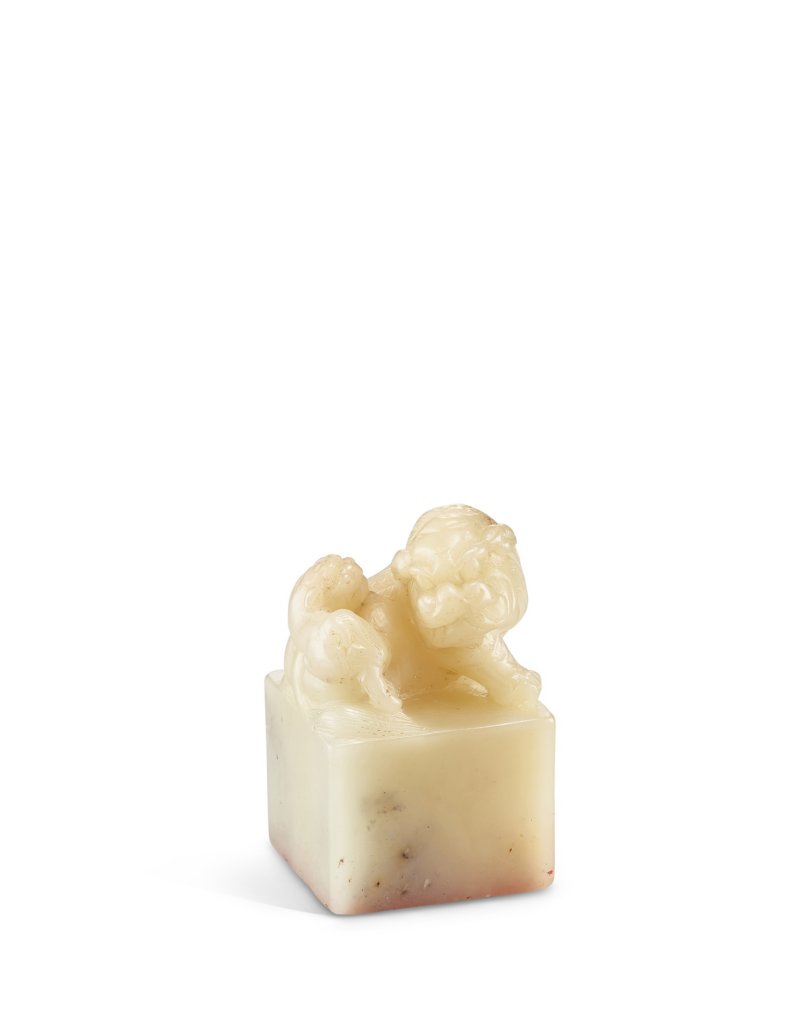

Lot 6040 An imperial soapstone 'mythical beast and cub' seal Qing dynasty, Jiaqing period | 清嘉慶 御製壽山石獅鈕方璽 印文:毓慶宮寶
落槌价
预展中
成交价
预展中
| 拍卖公司 | 苏富比 |
|---|---|
| 拍卖时间 | 2026年10月30日 |
拍品信息
拍品名称
An imperial soapstone 'mythical beast and cub' seal Qing dynasty, Jiaqing period | 清嘉慶 御製壽山石獅鈕方璽 印文:毓慶宮寶
起拍价
HKD 2,000,000
估值区间
2,000,000 - 3,000,000 HKD
尺寸
未知
品相
Good overall condition, with expected minute nibbles to the extremities, especially along the edges of the seal face.
If a condition report is provided to assist you with assessing the condition of the lot, it is for guidance purposes only. Such condition report may not refer to all faults, restoration, alterations, or adaptations because Sotheby's is not a professional conservator or restorer but rather a condition report is a statement of subjective, qualified opinion genuinely held by Sotheby's. For these reasons, any such condition report is not an alternative to taking your own professional advice regarding the condition of the lot. Prospective buyers should also refer to the Guide for Buyers at Auction which includes important notices concerning the type of property in this sale.
If a condition report is provided to assist you with assessing the condition of the lot, it is for guidance purposes only. Such condition report may not refer to all faults, restoration, alterations, or adaptations because Sotheby's is not a professional conservator or restorer but rather a condition report is a statement of subjective, qualified opinion genuinely held by Sotheby's. For these reasons, any such condition report is not an alternative to taking your own professional advice regarding the condition of the lot. Prospective buyers should also refer to the Guide for Buyers at Auction which includes important notices concerning the type of property in this sale.
更多信息
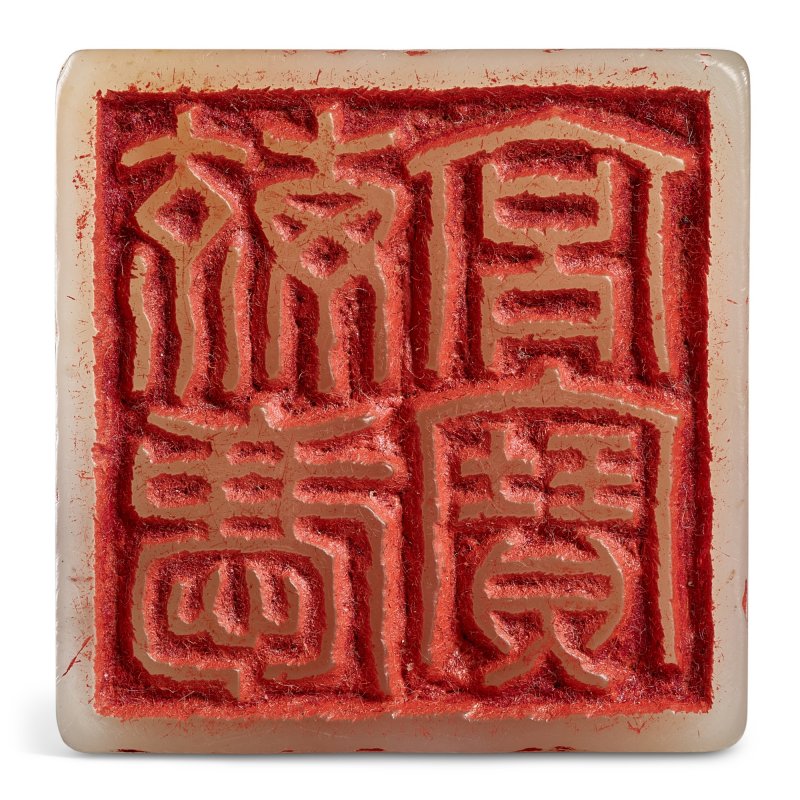
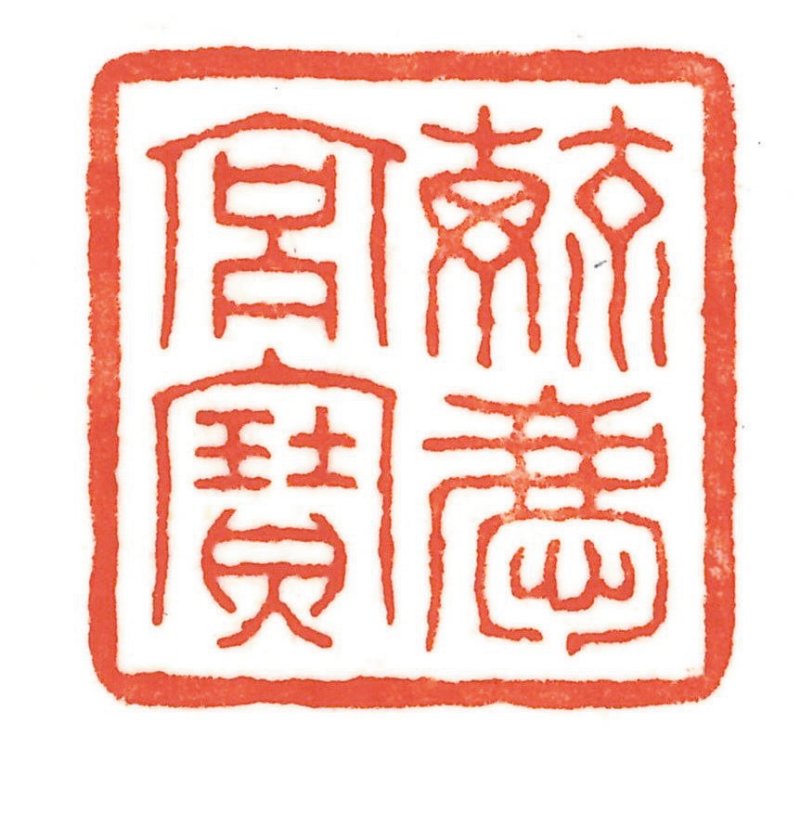
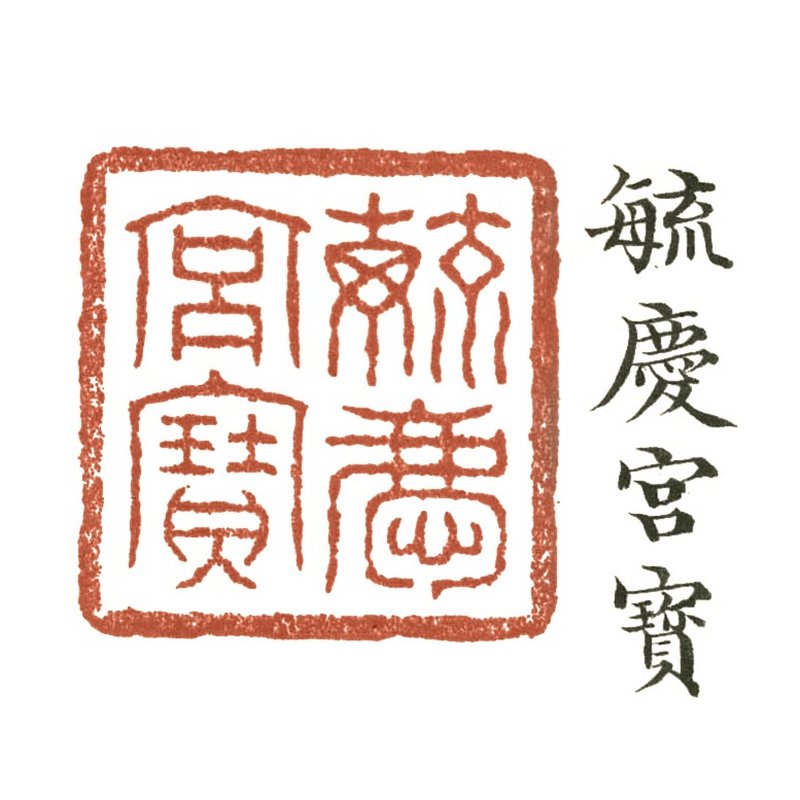
the seal face carved with four characters reading Yuqing gong bao ('Treasure of the Hall of Celebrating Cultivation')
4.8 cm
来源:Sotheby's Hong Kong, 3rd October 2018, lot 3632.
图录
说明:來源
香港蘇富比2018年10月3日,編號3632
On the Shoushan Stone Yuqinggong Seal of the Jiaqing Period
Guo Fuxiang
Seals are an important and distinctive aspect of the China’s glorious civilisation. The study of seals, and especially the seals of emperors, is crucial to understanding the politics, economics, and intellectual and cultural history of China’s two-millennia-long imperial period. Few Ming and pre-Ming imperial seals have survived the privations of time, and it is difficult to reconstruct their history. By contrast, many seals used by the Qing emperors are extant today, enabling us to research and understand their use and context in a systematic manner.
A common feature of Qing imperial seals is that the frequency of a seal text’s appearance was closely related to an emperor’s thoughts, interests, and personal experiences. If the name of a building appears repeatedly in an emperor’s seals, then that building must have held a special significance for him. A prime example is Qianlong’s Sanxitang or Hall of Three Rarities. The thirteen extant Sanxitang seals make clear to us that this was the palace where the cultivated Qianlong Emperor roamed imaginatively through history and art, and where he lodged the aspirations of a lifetime. The same can be said for his son the Jiaqing Emperor’s Yuqing Palace. During his reign, Jiaqing had eight imperial seals made carved with the text Yuqinggong, indicating the special importance of his palace. Among these eight seals is the Shoushan stone Yuqing Palace seal presently on offer at Sotheby’s.
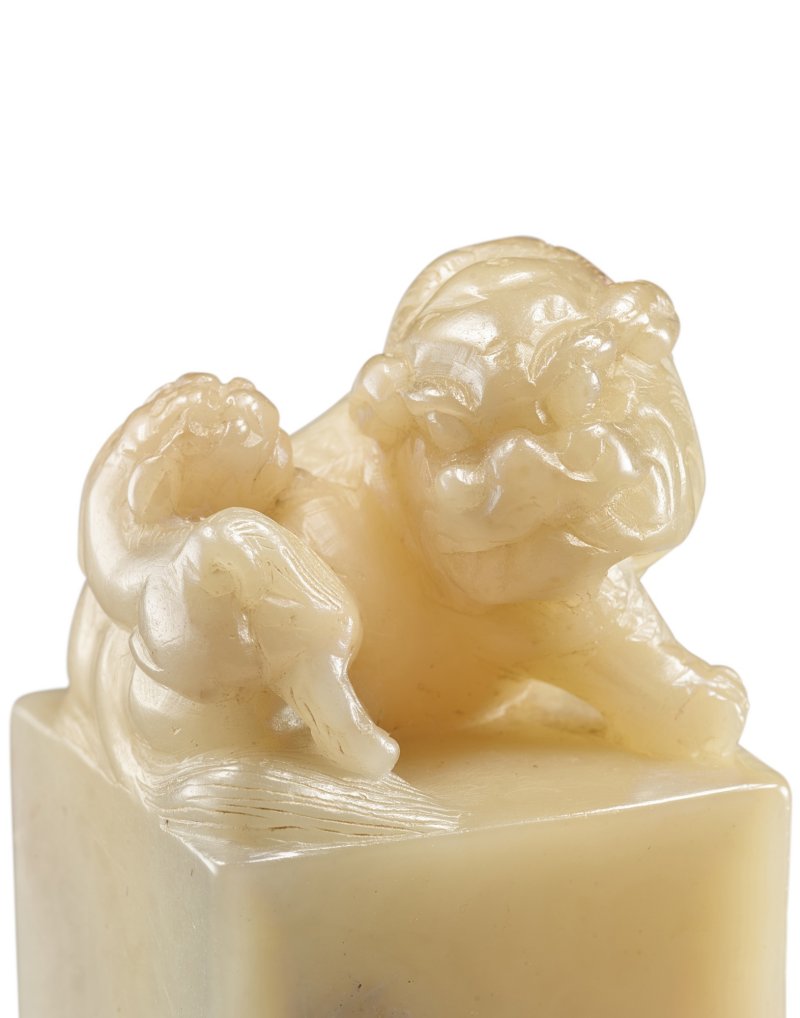
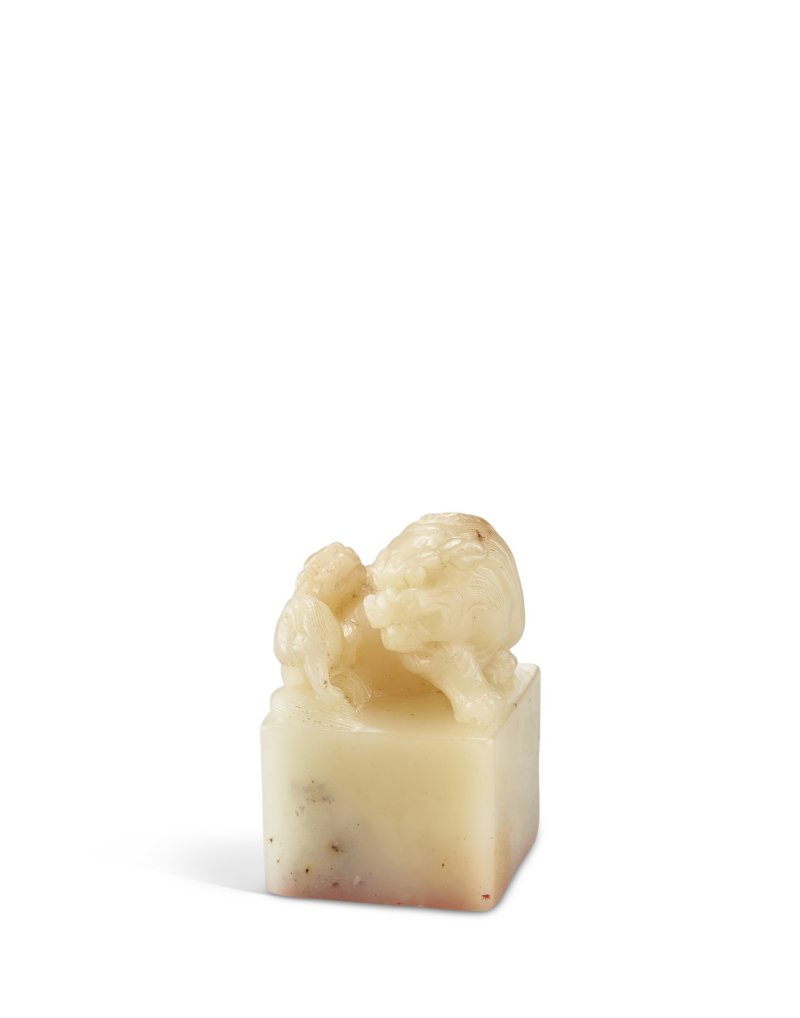
Carved from Shoushan stone, the seal stands 4.5 cm in height and has a face that measures 3 cm on each side. Its knob is in the form of a lionness and her cub. In seal script, the embossed seal text reads Yuqinggong bao (Seal of the Yuqing Palace). The seal is clearly documented in Jiaqing baosou [Catalogue of the Jiaqing Emperor’s Seals], exactly matching the corresponding record in material, form, dimensions, and the script and composition of the seal text. The lot on offer is doubtlessly the authentic seal used by the Jiaqing Emperor.
The Jiaqing Emperor, whose personal name was Yongyan, was the fifth ruler of the Qing dynasty after its conquest of the Chinese mainland. His 25th-year reign represented both the continuation of the Golden Age of the Kangxi and Qianlong emperors and the decline of the Qing empire. It was thus a period fraught with complex, inchoate emotions. This is exemplified by Jiaqing’s relationship with the Yuqing Palace.
The Yuqing Palace is located north of Jingyun Gate on the eastern part of the Forbidden City, and southeast of the Qianqing Palace. It was constructed in 1679 by the Kangxi Emperor specifically for the prince Yunreng, who was then Heir Apparent. Later, Yunreng’s unsavoury personality led to his abolishment as heir, exile from the palace, and imprisonment. Thereupon the Yuqing Palace became a residence for the Qing princes. The Qianlong Emperor lived here for five years, beginning at age 12, and left for the Chonghua Palace only after his marriage. During Qianlong’s reign, the Yuqing Palace was a communal residence for young princes. Prince Yongyan lived for ten years with his imperial siblings and cousins until his marriage, whereupon he moved to the Qiandong wusuo and then to the Yufang Palace. This was the first connection between Jiaqing and the Yuqing Palace.
In 1795, the sixtieth anniversary of Qianlong’s ascent to the throne, the emperor gathered the princes and high officials and had a secret edict extracted from the back side of the plaque reading Guangming zhengda at Qianqing Palace. This edict announced Yongyan as Heir Apparent, and a ceremony was decided for the following year confirming this status. The grand ceremony took place on the first day of the first month of the following year, which was the first year of the Jiaqing reign. On this occasion Qianlong passed to his son the emperor’s seal reading Huangdi zhibao, thus ending his six-decade career as emperor and becoming the only Emperor Emeritus of the Qing dynasty. By rights, after his abdicacy Qianlong should have moved into the Ningshou Palace and allowed his successor to enter the Hall of Mental Cultivation, but he had become too comfortable in the Hall of Mental Cultivation and used to receiving officials there. As a result Qianlong asked the new Jiaqing Emperor moved back into Yuqing Palace and gave it the title Jidetang (Hall of Continued Virtue). Soon after becoming Heir Apparent, on the 18th day of the 11th month of the 60th year of the Qianlong reign, Jiaqing moved from the Xiefang Palace into the Yuqing Palace, where he lived until Qianlong’s death on the third day of the first month of the Jiaqing reign. Afterwards Jiaqing continued to live in the Yuqing Palace for three more years. This was the second connection between the palace and the Jiaqing Emperor.
During his three years in Yuqing Palace, Jiaqing had to visit his father at the Hall of Mental Cultivation everyday to receive instruction in rulership. In fact, these years were miserable for Jiaqing, who was trapped between the Emperor Emeritus above and powerful ministers below and reduced to a subservient position. A Korean emissary once described Jiaqing’s situation in the following words: “...sat subordinately to the Emperor Emeritus, happy when he was happy, laughing when he laughed... During banquets, [Jiaqing] sat subordinately next to Emperor Emeritus, attending to his every movement and not communicating any orders”. Jiaqing was emperor in name only and was in truth a student. To live under his father’s shadow during the very first few years of his reign must have had a profound effect on his later career.
In 1799, when Jiaqing became emperor in deed, he moved into the Hall of Mental Cultivation. Following Qianlong’s precedent in reserving his princely residence, the Chonghua Palace, as a palace of leisure, Jiaqing likewise decided to reserve the Yuqing Palace for his own pleasure. This also served to preserve the system of secrecy surrounding succession. As Jiaqing himself explained, although he now lived in the Hall of Mental Cultivation, if he gave the Yuqing Palace as a residence to a prince, it would invite speculation about that prince’s being his favoured heir. This would be far from a blessing to the prince. Therefore he departed the original function of the Yuqing Palace as a princely residence and reserved it for himself. This was the third connection between the palace of the Jiaqing Emperor.
From the above, it is clear that the Yuqing Palace had a special significance for Jiaqing, and was the site of many of his profoundly formative experiences and memories. It was therefore not surprising that Jiaqing had many imperial seals carved after the palace’s name. The majority of these seals were made not long after his ascendance to the throne, while Jiaqing was living in the palace and adjusting its function.
According to Jiaqing baosou, Jiaqing’s eight imperial seals with the text of Yuqinggong bao were virtually always used in combination with his other imperial seals. When used with Jiaqing yubi (By Jiaqing’s imperial brush) and Chuanxin jiming (Transmitting the heart as fundamental mission), the seals reflected Jiaqing’s status as a student to the Emperor Emeritus during his time in the Yuqing Palace. During this time, Jiaqing pursued artistic activities on the one hand, hnce the use of the Jiaqing yubi seal, and learnt from his father how to conduct politics in order to perpetuate the prosperity of the Qing emperor, hence the use of the Chuanxin jiming seal. The Yuqinggongbao seal was also often used together with other palace seals, such as those of Chunbendian and Jidetang. Perhaps for convenience, the Yuqinggongbao was stored together with the palace seals Chunbendian, Jidetangbao, and Changchunxianguan, suggesting that Jiaqing used Yuqinggongbao often during his early reign.
The Jiaqing Emperor had only 500 imperial seals, a number surpassed only by his father among all the emperors of the Qing dynasty. Jiaqing’s seals vary greatly in form and style. Some are plain and functional, while many others are of high material quality and craftsmanship. The present Yuqinggongbao seal was carved from furong stone from Shoushan, a stone with a lush tonality that accords with Qing court standards for dongshi (cold stones). Furong stone is referred to in Jiaqing baosou and Daoguang baosou [Catalogue of the Daoguang Emperor’s imperial seals] as dongshi (cave stones). The knob of the seal is in the form of a lionness and her cub. The lionness has bent hindlegs and raises her body with her frontlegs, and turns her head to the side, echoing her cub’s pose in an endearing manner.
Notably, the Yuqinggongbao seal was included in the later Daoguang baosou. This indicates that the Daoguang Emperor regarded it as seal frequently used by his father and adopted it as his own, perhaps as an expression of filiality. The seal thus gives us insight into the emotional bond between Jiaqing and Daoguang as father and son.
關於嘉慶壽山石「毓慶宮寶」
郭福祥
中國璽印,是中國燦爛歷史文化的重要組成部分。研究中國璽印,特別是研究中國封建社會的皇帝璽印,對於認識中國長達兩千多年的封建社會的政治、經濟、思想和文化諸方面都有極重要的價值和意義。隨著時代變遷和朝代更迭,明代以前各朝代的皇帝璽印實物存世者寥寥,很難獲得其確切的歷史面貌,只有清代皇帝的御用璽印還有較多的遺存,為我們系統瞭解、認識和研究皇帝御用璽印提供了條件。
通觀清朝歷代皇帝的御用印璽,可以發現皇帝御用印璽在印文的選取上有這樣一個規律,即同一印文在御用印璽中出現的頻率與皇帝本人的思想、情趣、喜好以及其自身的經歷密切相關。就宮殿璽而言,一旦同一建築的名字反復出現在不同御用璽印中,那麼這個建築一定和該皇帝有著非同尋常的關聯。乾隆皇帝的三希堂就是很典型的例子,十三方「三希堂」璽讓我們確信那裡就是這位儒雅天子的神游馳騁之所,承載著其一生的精神和寄託。同樣,他的兒子嘉慶皇帝的毓慶宮也不遑多讓,即位以後,刻製了多達八方的「毓慶宮」璽,是嘉慶在位期間刻製宮殿璽最多的地方,顯示出毓慶宮這個地方對嘉慶皇帝所具有的重要意義。而香港蘇富比公司即將拍賣的這方壽山石「毓慶宮寶」就是其中的一方。
此方寶璽為壽山石質地,印面3公分見方,通高4.5公分。子母獅鈕,印文為陽文篆書「毓慶宮寶」四字。在現藏於北京故宮的《嘉慶寶藪》(嘉慶璽印譜)中有明確著錄。將實物與《寶藪》比對,該璽無論是質地、形制、大小,還是印文的篆法、佈局都與該書中的著錄完全一致,可以確定為嘉慶皇帝御用寶璽的真品。
此方寶璽的所有者嘉慶皇帝名顒琰,為清朝入關後的第五代皇帝。在他統治清朝的二十五年之中,既秉承了康乾盛世之遺緒,又處於清王朝由盛及衰的重要轉折時期,因此在各方面都呈現出似乎難以言說的複雜情狀。從他與毓慶宮之間的關聯中也充分體現出這一點。
毓慶宮位於紫禁城東部景運門外北側,乾清宮東南,建於康熙十八年(1679年),是康熙皇帝特意為當時的皇太子允礽修建的寢宮。後來允礽因為性情暴戾,狂妄不孝被廢除太子之位,移出毓慶宮,禁錮他處。毓慶宮便成為皇子皇孫居住的地方。乾隆皇帝從十二歲開始在這裡居住五年,因為成婚分住才移居重華宮。乾隆時期,這裡成為年少皇子皇孫的公共居住場所,當時還是皇子的顒琰也和眾多皇室子孫一起居住在這裡,長達十年之久。成婚時他從毓慶宮遷到乾東五所居住,後來又移居擷芳殿。這是嘉慶皇帝與毓慶宮的第一次關聯。
乾隆六十年(1795年)九月初三日,即乾隆繼位周申之年,他召集皇子、皇孫、諸王公大臣一起鄭重取出當年藏在乾清宮「正大光明」匾額後的建儲密旨,宣佈皇十五子顒琰為皇太子,並決定次年新正舉行禪位大典。嘉慶元年正月元旦,大典隆重舉行。乾隆將「皇帝之寶」授給顒琰,從而結束了自己長達六十年之久的皇帝生涯,成為清朝歷史上唯一的「太上皇帝」。乾隆退位後,本應移居甯壽宮,讓新皇帝住進養心殿,但他以自己居住養心殿已六十年,安全吉祥,且便於召見群臣,不願遷出,而讓新皇帝顒琰移居毓慶宮,並賜名「繼德堂」。顒琰成為皇儲後不久,即乾隆六十年十一月十八日乾隆皇帝命其自擷芳殿移居毓慶宮,直到嘉慶四年正月初三日乾隆帝薨世。嘉慶皇帝又在毓慶宮居住了三年多。這是嘉慶皇帝與毓慶宮的第二次關聯。
嘉慶居住在毓慶宮的三年,每天都要從毓慶宮出發至養心殿「日侍寢門之膳,敬申定省之憂」, 從乾隆帝那裡學習為君之道。但實際上,嘉慶帝在毓慶宮的三年,可以說是不堪回首的三年,上有太上皇壓制,下有權臣當道,尤其是和太上皇在一起,顒琰完全處於陪侍地位。朝鮮使臣曾形容說嘉慶皇帝「……侍坐太上皇,上皇喜則亦喜,笑則亦笑。……宴饗之時,侍坐上皇之側,只視上皇之動靜,而一不轉囑。」 嘉慶帝只是徒有皇帝虛名,一個新繼位的皇帝卻像一名小學生一樣接受訓誡,新繼位者本應有的銳氣在這樣的受教學習中被消磨殆盡,這不能不對嘉慶親政以後的執政產生影響。
嘉慶四年(1799年),嘉慶帝親政以後,入主養心殿。同時決定不再以毓慶宮作為皇子們的居所,而是遵照乾隆皇帝將皇子時居住的重華宮改為專供自己臚歡展慶之所的先例,將毓慶宮留置給自己,以便不時幾暇臨幸。同時這也是維護秘密建儲制度的舉措。正如他自己所說:「予蒙恩獨厚,自乙卯至己未居此四年。今雖居養心殿,若仍定皇子居毓慶宮,致啟中外揣摩迎合之漸,大非皇子之福。故予留置毓慶宮,為幾暇臨幸之處。」從而改變了毓慶宮自建造以來即為皇子居所的功能,成為他自己的專屬。這是嘉慶皇帝與毓慶宮的第三次關聯。
由上可知,毓慶宮對嘉慶皇帝而言有著非同尋常的意義,將這一留給自己太多深刻記憶的宮殿的名字作為印文,刻製諸多的「毓慶宮」宮殿璽,也就可以理解了。這些印璽絕大部分都是在嘉慶繼位和親政後不長的時間內刻製的,正是嘉慶皇帝作為一國之君居住在毓慶宮和對毓慶宮功能進行調整的時期。
根據《嘉慶寶藪》,嘉慶皇帝的這八方「毓慶宮寶」基本上都是與另外的璽印一起組合成組印。如與「嘉慶御筆」、「傳心基命」組合,基本上反映了嘉慶皇帝繼位初期毓慶宮受教階段生活的真實狀況,在這裡,他一方面要進行一些藝事活動,怡情翰墨,故有「嘉慶御筆」璽,另一方面還要從他的父親乾隆皇帝那裡學習如何治國理政,使大清統治長治久安,故有「傳心基命」之璽。再比如「毓慶宮寶」還常與毓慶宮內其他宮殿如「惇本殿」、「繼德堂」等殿名璽組合在一起,這可能是為了方便鈐用而為,此方「毓慶宮寶」就是與「惇本殿寶」、「繼德堂寶」 「長春仙館」璽同匣存貯,應該是嘉慶皇帝早期經常鈐用的御用璽印。
就清代皇帝御用璽印的製作而言,嘉慶皇帝的御用璽印在數量上僅次於乾隆皇帝,多達五百餘方,形態多樣,可謂豐富。其中樸實無華者有之,質精而美者亦不在少數。而此方「毓慶宮寶」所選材質為比較溫潤的壽山芙蓉石,符合清宮所謂「凍石」的標準,與《嘉慶寶藪》和《道光寶藪》中著錄的「洞石」材質一致。其印鈕為子母獅造型,母獅後足蹲踞,前足支撐起身體,頭側轉,與趴在其身上同樣側轉頭部的幼獅相互呼應,憨態可掬。
可注意者,此方璽印在後來編纂《道光寶藪》時也被收入其中,可見道光皇帝也是把此璽當做他父親的通用璽印看待的,沿以用之,似有相承之意。相信撫摸賞鑑之餘,對嘉慶皇帝和道光皇帝父子的性情心緒也會有更進一步的理解。
常见问题
这件An imperial soapstone 'mythical beast and cub' seal Qing dynasty, Jiaqing period | 清嘉慶 御製壽山石獅鈕方璽 印文:毓慶宮寶的成交价是多少?
落槌价为 预展中。 成交价为 预展中。
拍品的品相状况如何?
Good overall condition, with expected minute nibbles to the extremities, especially along the edges of the seal face.
If a condition report is provided to assist you with assessing the condition of the lot, it is for guidance purposes only. Such condition report may not refer to all faults, restoration, alterations, or adaptations because Sotheby's is not a professional conservator or restorer but rather a condition report is a statement of subjective, qualified opinion genuinely held by Sotheby's. For these reasons, any such condition report is not an alternative to taking your own professional advice regarding the condition of the lot. Prospective buyers should also refer to the Guide for Buyers at Auction which includes important notices concerning the type of property in this sale.
If a condition report is provided to assist you with assessing the condition of the lot, it is for guidance purposes only. Such condition report may not refer to all faults, restoration, alterations, or adaptations because Sotheby's is not a professional conservator or restorer but rather a condition report is a statement of subjective, qualified opinion genuinely held by Sotheby's. For these reasons, any such condition report is not an alternative to taking your own professional advice regarding the condition of the lot. Prospective buyers should also refer to the Guide for Buyers at Auction which includes important notices concerning the type of property in this sale.
这件拍品的流传来源是什么?
Sotheby's Hong Kong, 3rd October 2018, lot 3632.
图录
图录