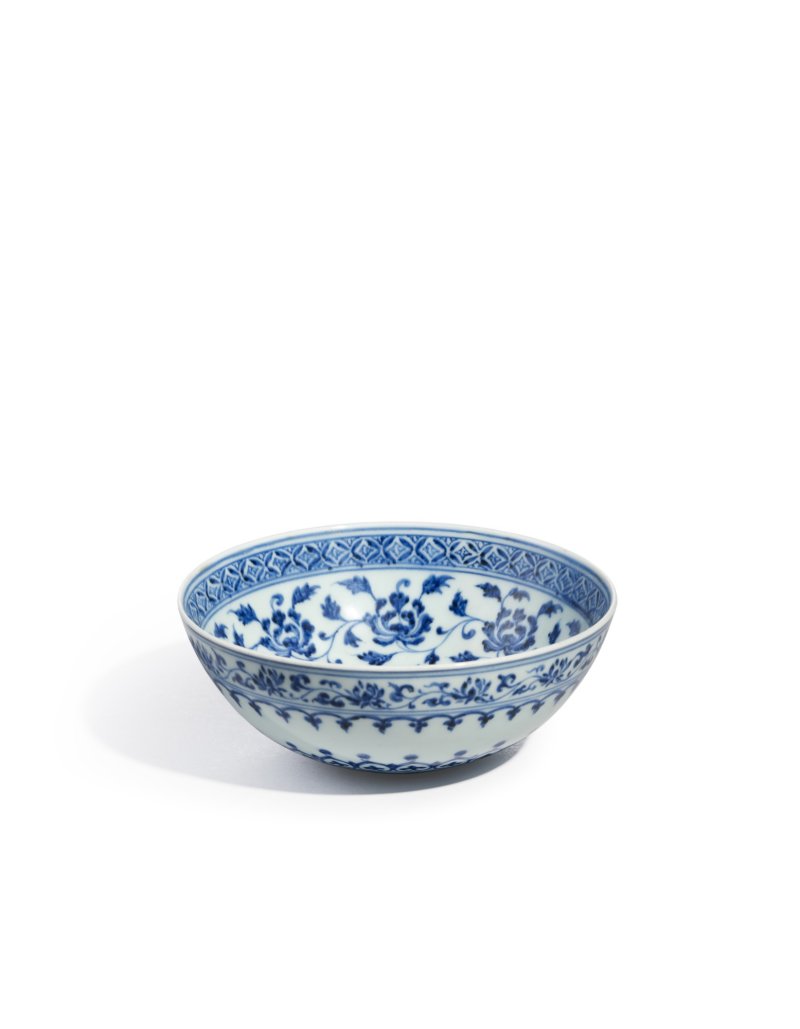

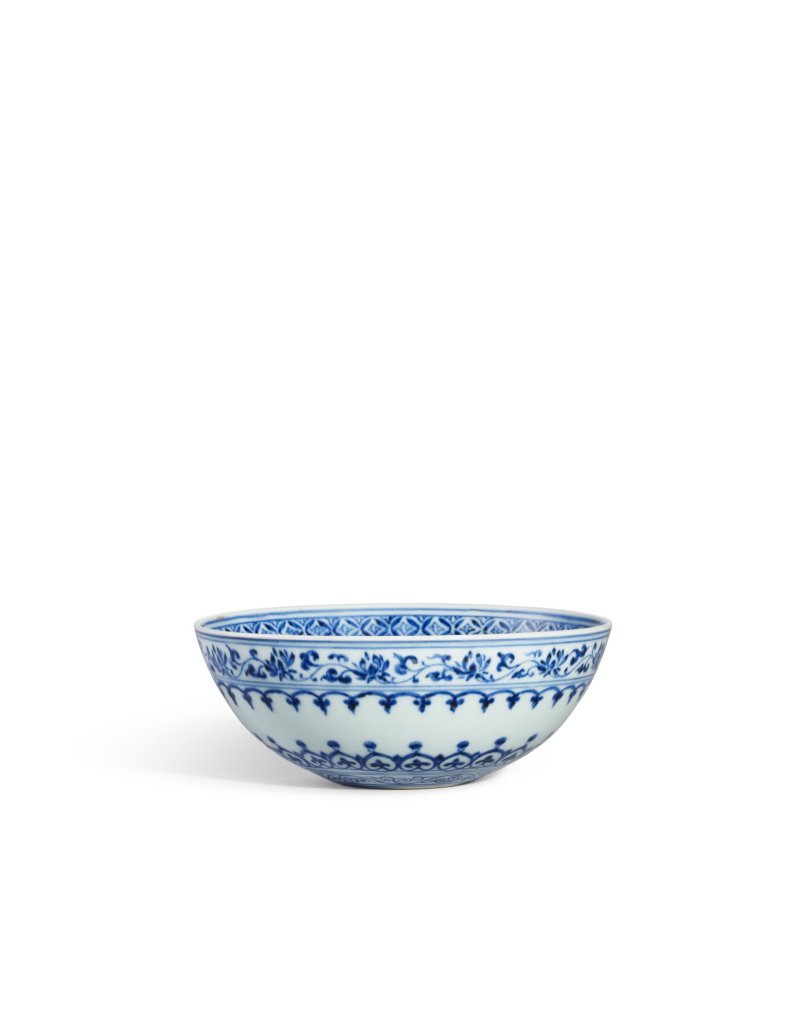
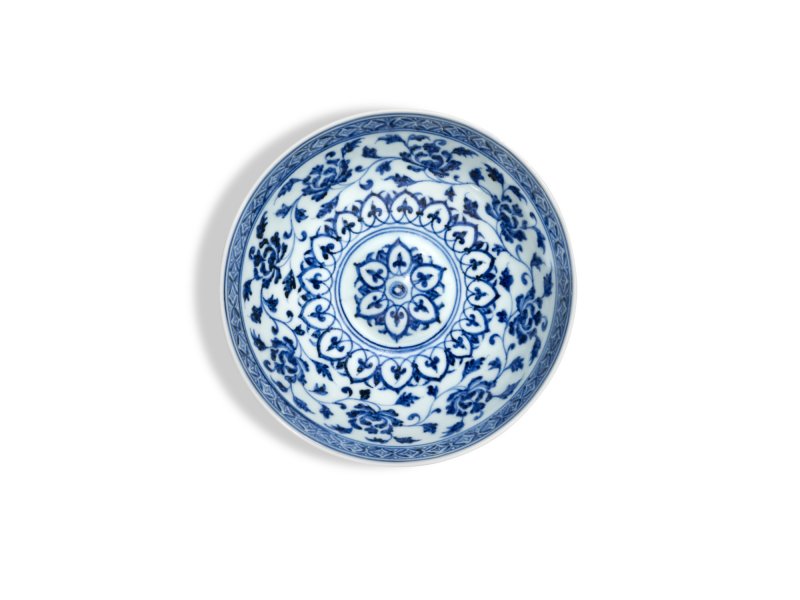
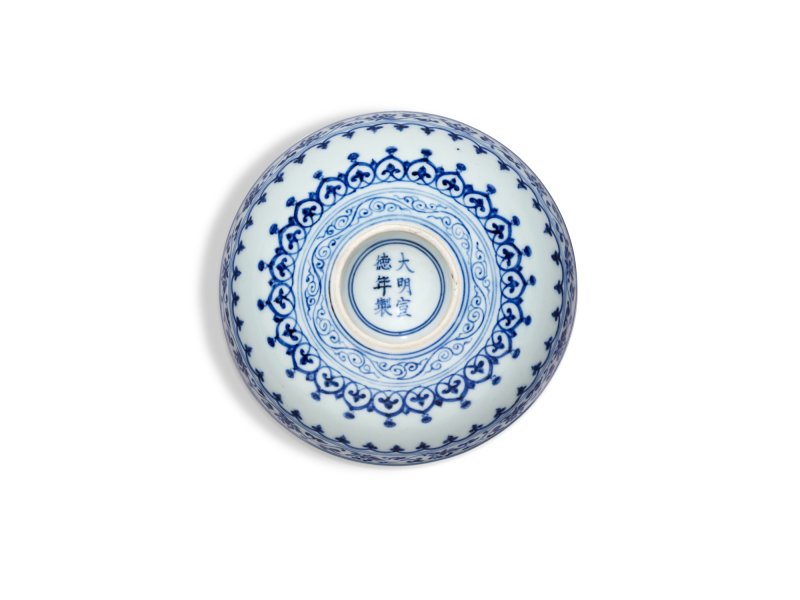
Lot 6004 A fine and exceedingly rare blue and white 'lotus’ mantouxin bowl, Mark and period of Xuande | 明宣德 青花纏枝蓮紋饅頭心盌 《大明宣德年製》款
落槌价
预展中
成交价
预展中
| 拍卖公司 | 苏富比 |
|---|---|
| 拍卖时间 | 2026年10月30日 |
拍品信息
拍品名称
A fine and exceedingly rare blue and white 'lotus’ mantouxin bowl, Mark and period of Xuande | 明宣德 青花纏枝蓮紋饅頭心盌 《大明宣德年製》款
起拍价
HKD 2,500,000
估值区间
2,500,000 - 3,500,000 HKD
尺寸
未知
品相
The bowl is in very good overall condition with just minimal expected surface wear.
整體品相良好,僅見器面輕微磨痕,屬正常。
If a condition report is provided to assist you with assessing the condition of the lot, it is for guidance purposes only. Such condition report may not refer to all faults, restoration, alterations, or adaptations because Sotheby's is not a professional conservator or restorer but rather a condition report is a statement of subjective, qualified opinion genuinely held by Sotheby's. For these reasons, any such condition report is not an alternative to taking your own professional advice regarding the condition of the lot. Prospective buyers should also refer to the Guide for Buyers at Auction which includes important notices concerning the type of property in this sale.
更多信息
17.2 cm
图录
说明:Expertly painted in rich, contrasting tones of cobalt blue, this exceptional bowl exemplifies the celebrated aesthetics of blue-and-white porcelain produced at the imperial kilns in Jingdezhen during the Xuande period (1426–1435). Under the direct patronage of the Emperor, himself a painter and a dedicated connoisseur of the arts, the imperial workshops achieved a peak phase of porcelain creation. The complex, meticulously balanced layout of this piece perfectly reflects the refined taste and innovative spirit of the early Ming court, capturing the classic depth and "heaped and piled" character of the period's most admired wares.
Bowls of this form are known as mantou xin ("steamed bun center") due to its distinctive domed interior, derives from Middle Eastern Mamluk metalwork that arrived in China via maritime trade routes. In the records of early Ming porcelain, only one almost identical example of this exact design and size seems to have appeared, the Riesco Xuande bowl which was sold at Christie’s Hong Kong, 27 November 2013, lot 3110, which suggests that the two could have been created as a pair.
Unlike the continuous, all-over pattern of scrolling lotus on the interior of the present bowl, the extant examples feature an additional narrow band of floral scroll around the central dome but lack the prominent frieze of scrolling lotus above, leaving a broad band of undecorated white space across the cavetto. Furthermore, the cash diaper band at the interior rim has been replaced by a classic scroll, and the exterior base is surrounded by overlapping lappets instead of the two decorative bands seen on the current bowl. See a Yongle example bearing such decoration excavated from the Yongle stratum at Dongmentou, Zhushan in Jingdezhen, illustrated in Imperial Hongwu and Yongle Porcelain Excavated at Jingdezhen, Taipei, 1996, pl. 83.
For Xuande mark and period examples adhering to this layout, compare an example in the Palace Museum, Taipei, included in the Catalogue of the Special Exhibition of Hsüan-te Imperial Porcelains of the Ming Dynasty, Taipei, 1998, pp. 296-297, no. 121; another in the Haags Gemeentemuseum, The Hague, illustrated by D. Lion Goldschmidt, La Porcelaine Ming, 1978, p. 102, pl. 75; a third in the Umezawa Memorial Hall, Tokyo, illustrated in Sekai Toji Zenshu, vol. 14, Tokyo, 1976, p. 159, fig. 20; and a fourth example sold at Christie's Hong Kong, 1st November 2004, lot 1074; and another sold in these rooms, 8th October 2008, lot 2544.
常见问题
这件A fine and exceedingly rare blue and white 'lotus’ mantouxin bowl, Mark and period of Xuande | 明宣德 青花纏枝蓮紋饅頭心盌 《大明宣德年製》款的成交价是多少?
落槌价为 预展中。 成交价为 预展中。
拍品的品相状况如何?
The bowl is in very good overall condition with just minimal expected surface wear.
整體品相良好,僅見器面輕微磨痕,屬正常。
If a condition report is provided to assist you with assessing the condition of the lot, it is for guidance purposes only. Such condition report may not refer to all faults, restoration, alterations, or adaptations because Sotheby's is not a professional conservator or restorer but rather a condition report is a statement of subjective, qualified opinion genuinely held by Sotheby's. For these reasons, any such condition report is not an alternative to taking your own professional advice regarding the condition of the lot. Prospective buyers should also refer to the Guide for Buyers at Auction which includes important notices concerning the type of property in this sale.
整體品相良好,僅見器面輕微磨痕,屬正常。
If a condition report is provided to assist you with assessing the condition of the lot, it is for guidance purposes only. Such condition report may not refer to all faults, restoration, alterations, or adaptations because Sotheby's is not a professional conservator or restorer but rather a condition report is a statement of subjective, qualified opinion genuinely held by Sotheby's. For these reasons, any such condition report is not an alternative to taking your own professional advice regarding the condition of the lot. Prospective buyers should also refer to the Guide for Buyers at Auction which includes important notices concerning the type of property in this sale.