拍品信息
拍品名称
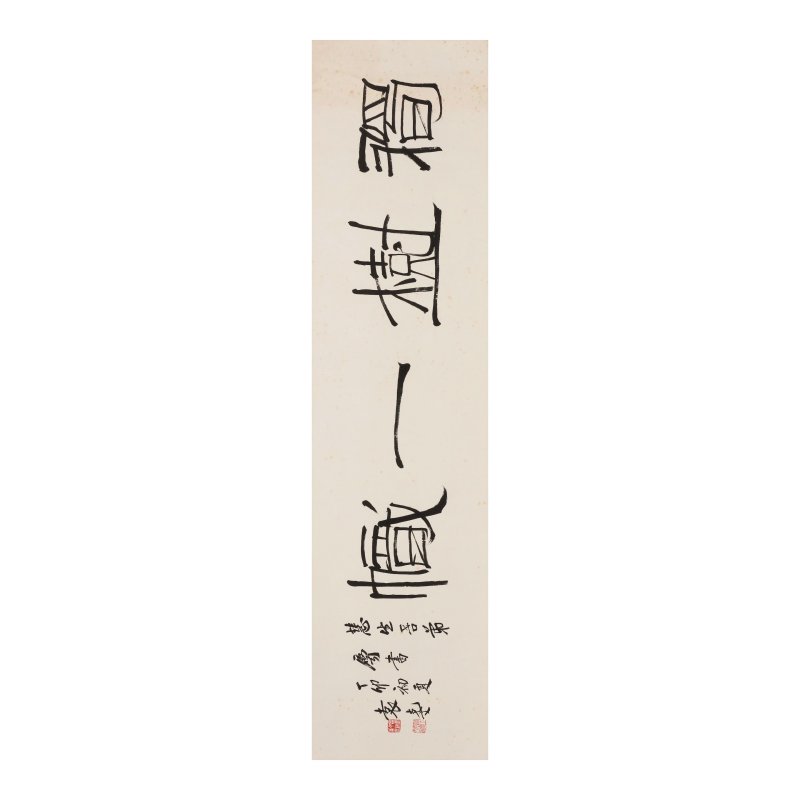
袁克文(1890-1931) 為荀慧生(1900-1968)寫隸書「獨樹一幟」 | YUAN KEWEN (1890-1931)
年代
Calligraphy for Xun Huisheng (1900-1968), 1927
起拍价
USD 4,000
估值区间
未知
尺寸
未知
品相
未知
更多信息
Calligraphy for Xun Huisheng (1900-1968), 1927
Horizontal hanging scroll, ink on paper, inscribed by the artist, with a dedication to Xun Huisheng (1900-1968), dated dingmao, signed Yuan Kewen, with two artist's seals.
13 x 52 1/2in (33 x 133.3cm)
Footnotes
Yuan Kewen was the second son of Yuan Shikai (1859-1916), the first formal president of the Republic of China. Exceptionally gifted and accomplished in the literary arts, he was greatly favored by his father, who at one point considered naming him his heir. Yuan Kewen, however, devoted himself to poetry, literature, theatre, and music rather than politics, and strongly opposed his father's attempt to proclaim himself emperor. Throughout his life, he was an ardent devotee of Chinese opera, particularly Kunqu and Peking opera, both of which he performed with considerable skill. He also wrote theatrical criticism and maintained close friendships with many of the leading opera performers of his day.
The dedicatee of the present lot, "Huisheng," refers to Xun Huisheng, then celebrated as one of the greatest performers of Peking opera. In the autumn of 1921, Xun traveled to Shanghai to perform, where his artistry greatly impressed Yuan, and the two subsequently arranged to appear onstage together. In 1923, on the occasion of Wu Changshuo (1844-1927)'s eightieth birthday, Yuan and Xun performed together in the Peking opera "Shentou Citang" (Interrogating the Head and Assassinating Tang Qin). Xun Huisheng had already become a student of Wu Changshuo in early 1920s, and in March 1927 he traveled to Shanghai to formally complete the ceremony acknowledging Wu as his teacher. Whenever Xun visited Shanghai, he would invariably call upon Wu Changshuo, Yuan Kewen, and the calligrapher Liu Wenjie (1881-1933). In a 2005 interview, Yuan Kewen's fourth son, Yuan Jiaji, similarly recalled: "The renowned southern Kunqu master Yu Zhenfei (1902-1993) was a close friend of my father, but his friendship with Xun Huisheng was especially intimate." Such recollections attest to the deep friendship between Yuan Kewen and Xun Huisheng and offer a vivid glimpse into the elegant literary and theatrical circles in which the two men moved.
袁克文(1890-1931) 為荀慧生(1900-1968)寫隸書「獨樹一幟」
水墨紙本 橫幅 一九二七年作
款識:獨樹一幟。慧生吾弟屬書,丁卯初夏,袁克文。
鈐印:寒雲千秋萬歲、洹上袁克文印
題簽:袁寒雲先生書法四言橫幅
袁克文為袁世凱次子,天資聰穎,才情出眾,深得其父愛重,一度欲立為儲。但袁克文只寄情詩文聲伎,不問政事,且力反其父稱帝。其平生雅好戲曲,兼擅昆京,並嘗撰劇評,與梨園名流過從甚密。本幅上款「慧生吾弟」即時謂「五大名旦」之一的荀慧生。袁克文常于京、滬、津等地往來,1921年秋,荀氏赴滬獻藝,袁克文後激賞不已,遂相約同台。1923年,二人借吳昌碩八秩壽辰之機,合演京劇〈審頭刺湯〉。荀慧生早歲已拜吳昌碩為師,1927年3月來上海補行拜師之禮。每至滬上,必往晤吳昌碩、袁克文及書家劉文玠。袁克文子袁家楫于2005年接受采訪時亦曾憶及「南方昆曲名家俞振飛先生與我父親交情深厚,尤其荀慧生與我父親的感情更是親密。」足見袁荀二人交誼匪淺,文采風流,至今猶可想像。
Horizontal hanging scroll, ink on paper, inscribed by the artist, with a dedication to Xun Huisheng (1900-1968), dated dingmao, signed Yuan Kewen, with two artist's seals.
13 x 52 1/2in (33 x 133.3cm)
Footnotes
Yuan Kewen was the second son of Yuan Shikai (1859-1916), the first formal president of the Republic of China. Exceptionally gifted and accomplished in the literary arts, he was greatly favored by his father, who at one point considered naming him his heir. Yuan Kewen, however, devoted himself to poetry, literature, theatre, and music rather than politics, and strongly opposed his father's attempt to proclaim himself emperor. Throughout his life, he was an ardent devotee of Chinese opera, particularly Kunqu and Peking opera, both of which he performed with considerable skill. He also wrote theatrical criticism and maintained close friendships with many of the leading opera performers of his day.
The dedicatee of the present lot, "Huisheng," refers to Xun Huisheng, then celebrated as one of the greatest performers of Peking opera. In the autumn of 1921, Xun traveled to Shanghai to perform, where his artistry greatly impressed Yuan, and the two subsequently arranged to appear onstage together. In 1923, on the occasion of Wu Changshuo (1844-1927)'s eightieth birthday, Yuan and Xun performed together in the Peking opera "Shentou Citang" (Interrogating the Head and Assassinating Tang Qin). Xun Huisheng had already become a student of Wu Changshuo in early 1920s, and in March 1927 he traveled to Shanghai to formally complete the ceremony acknowledging Wu as his teacher. Whenever Xun visited Shanghai, he would invariably call upon Wu Changshuo, Yuan Kewen, and the calligrapher Liu Wenjie (1881-1933). In a 2005 interview, Yuan Kewen's fourth son, Yuan Jiaji, similarly recalled: "The renowned southern Kunqu master Yu Zhenfei (1902-1993) was a close friend of my father, but his friendship with Xun Huisheng was especially intimate." Such recollections attest to the deep friendship between Yuan Kewen and Xun Huisheng and offer a vivid glimpse into the elegant literary and theatrical circles in which the two men moved.
袁克文(1890-1931) 為荀慧生(1900-1968)寫隸書「獨樹一幟」
水墨紙本 橫幅 一九二七年作
款識:獨樹一幟。慧生吾弟屬書,丁卯初夏,袁克文。
鈐印:寒雲千秋萬歲、洹上袁克文印
題簽:袁寒雲先生書法四言橫幅
袁克文為袁世凱次子,天資聰穎,才情出眾,深得其父愛重,一度欲立為儲。但袁克文只寄情詩文聲伎,不問政事,且力反其父稱帝。其平生雅好戲曲,兼擅昆京,並嘗撰劇評,與梨園名流過從甚密。本幅上款「慧生吾弟」即時謂「五大名旦」之一的荀慧生。袁克文常于京、滬、津等地往來,1921年秋,荀氏赴滬獻藝,袁克文後激賞不已,遂相約同台。1923年,二人借吳昌碩八秩壽辰之機,合演京劇〈審頭刺湯〉。荀慧生早歲已拜吳昌碩為師,1927年3月來上海補行拜師之禮。每至滬上,必往晤吳昌碩、袁克文及書家劉文玠。袁克文子袁家楫于2005年接受采訪時亦曾憶及「南方昆曲名家俞振飛先生與我父親交情深厚,尤其荀慧生與我父親的感情更是親密。」足見袁荀二人交誼匪淺,文采風流,至今猶可想像。