
拍品信息
拍品名称
(傳)孫祜(活躍於1736-1745年)/丁觀鵬(活躍於1740-1768)/周鲲(活躍於1741-1748) | AFTER SUN HU (active 1736-1745), DING GUANPENG (active 1740-1768) and ZHOU KUN (active 1741-1748)
年代
Tao Ye Tu (Illustrations of Porcelain Manufacture), Qianlong period, 18th century
起拍价
USD 40,000
估值区间
未知
尺寸
未知
品相
未知
更多信息
Tao Ye Tu (Illustrations of Porcelain Manufacture), Qianlong period, 18th century
Album of eight leaves, ink and color on silk, unsigned, with a collector's seal.
18 1/8 x 12 3/4in (46 x 32.4cm), each leaf
Footnotes
Provenance:
Sotheby's, Hong Kong, Fine Chinese Ceramic and Works of Art: Thirty Years, 26 October 2003, lot 156
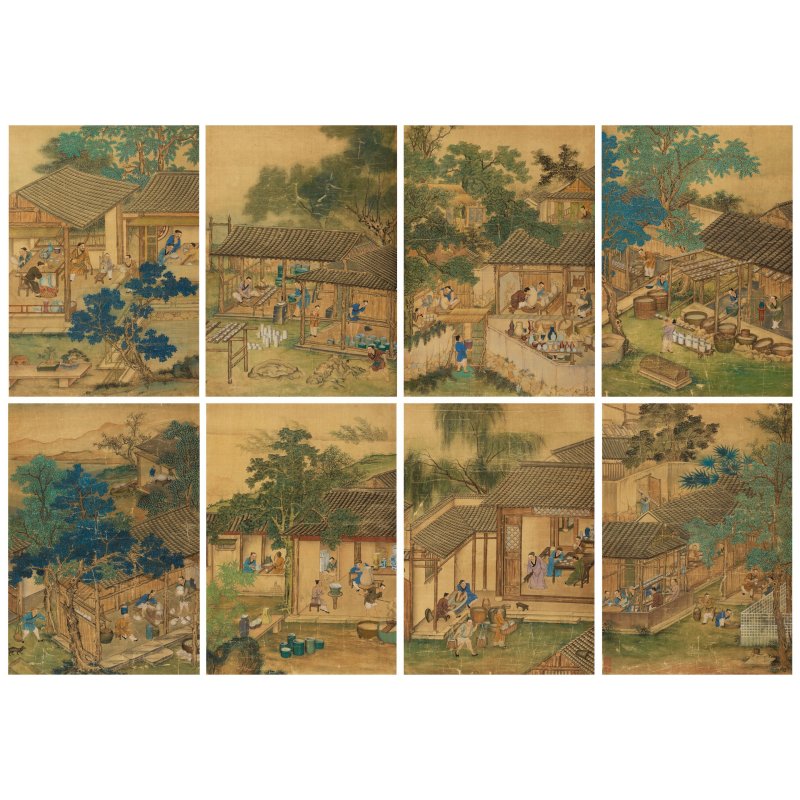
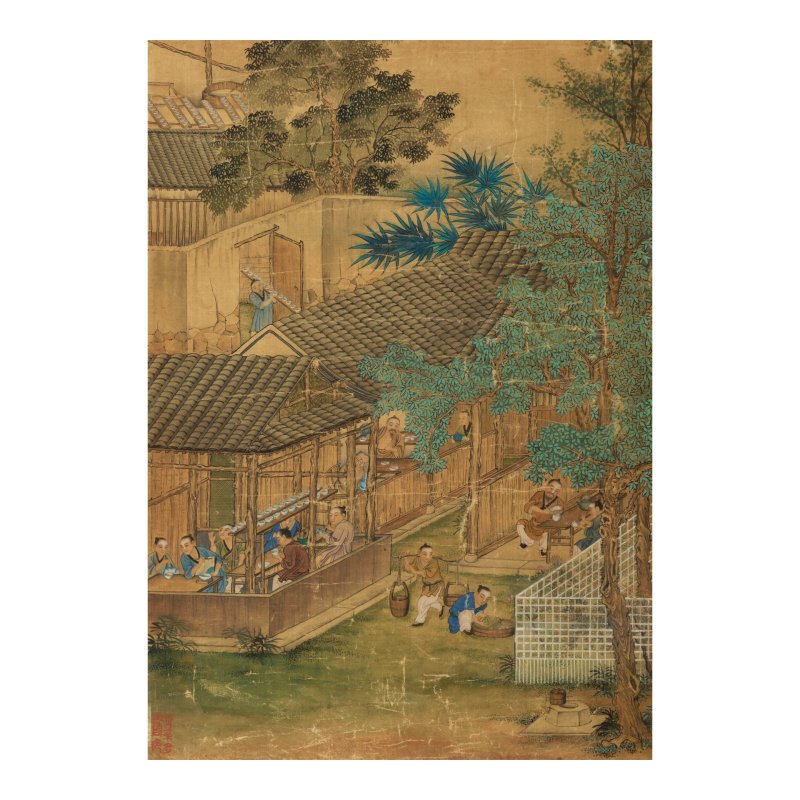
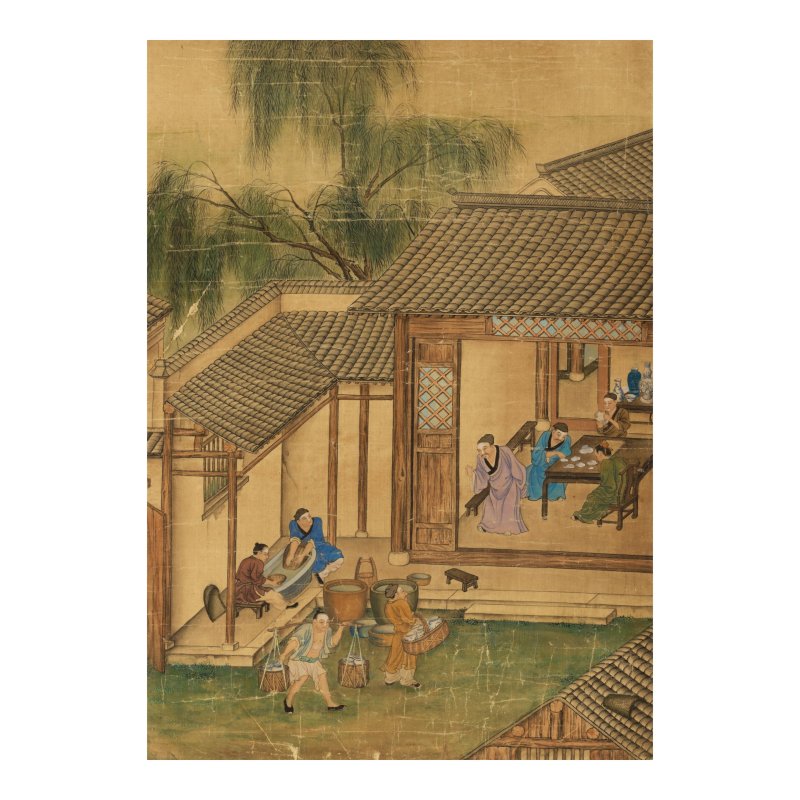
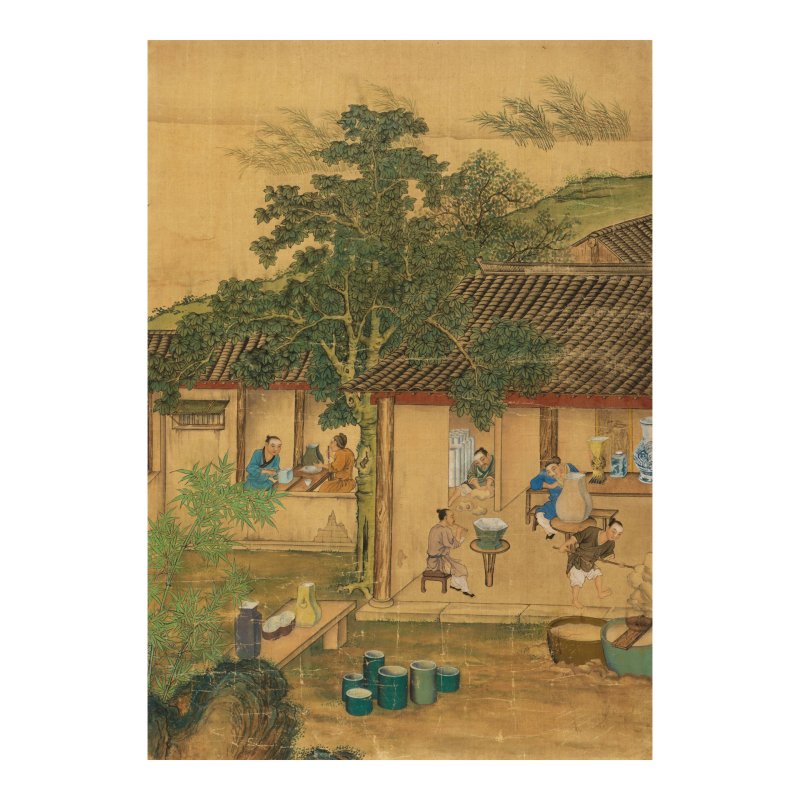
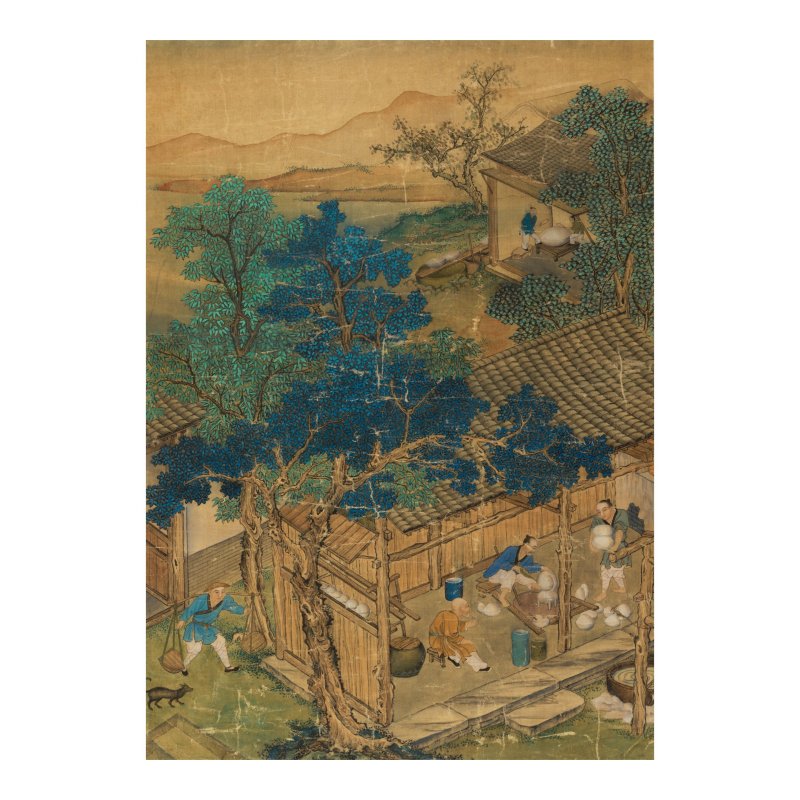
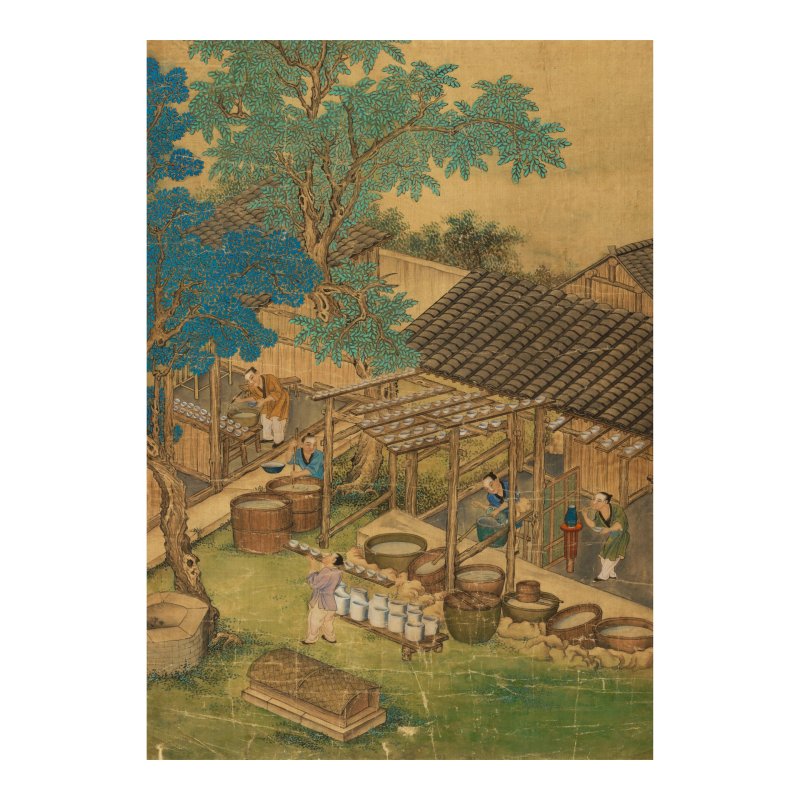
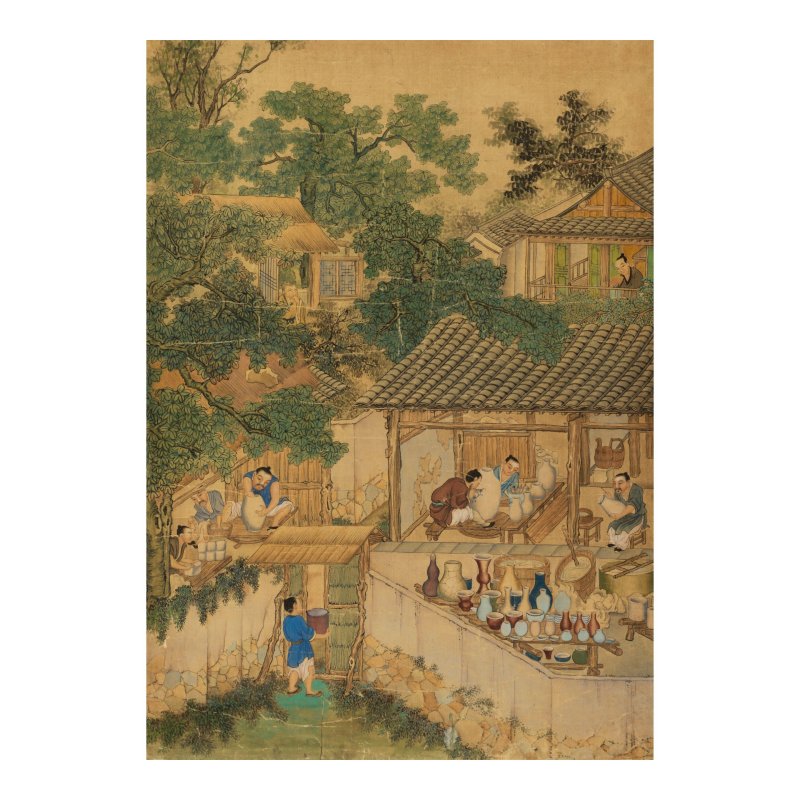
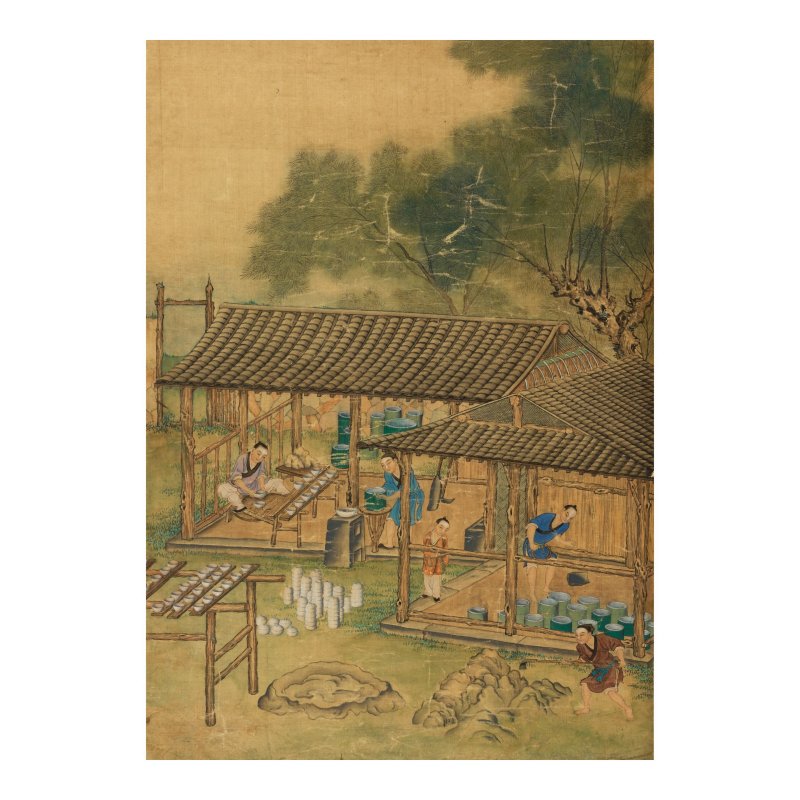
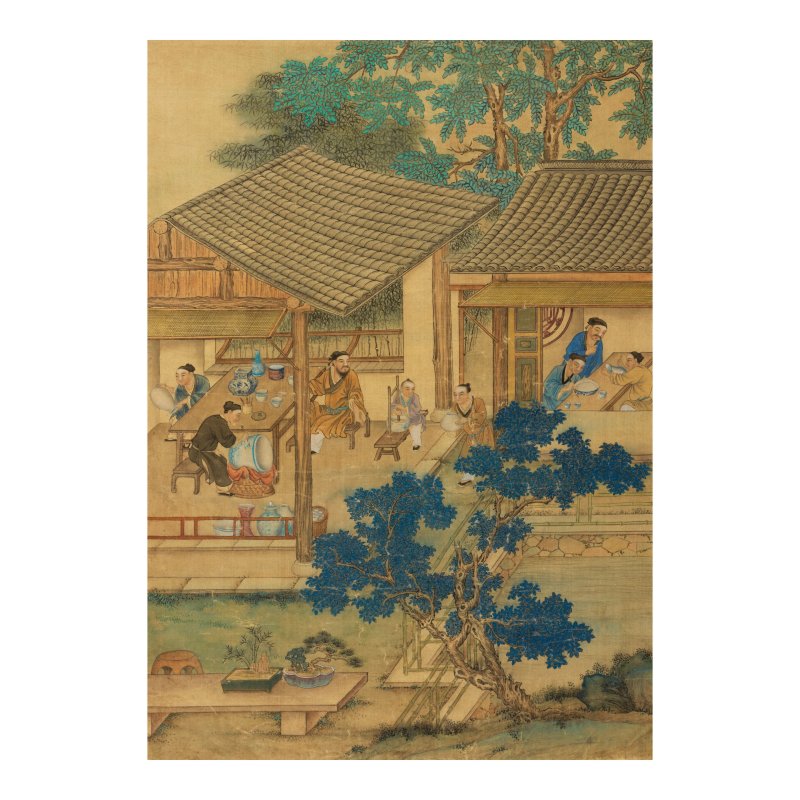
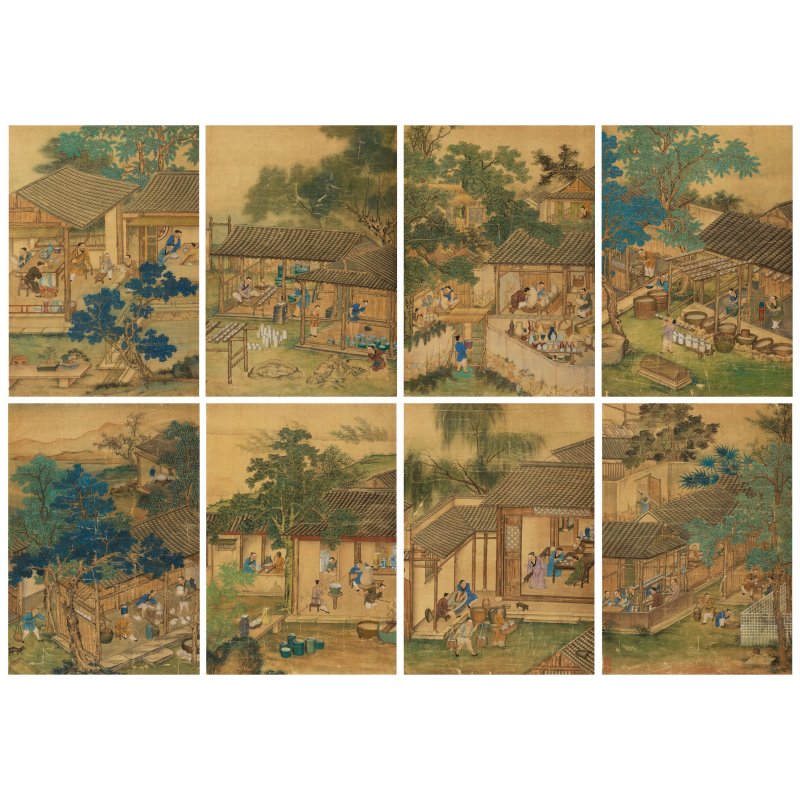
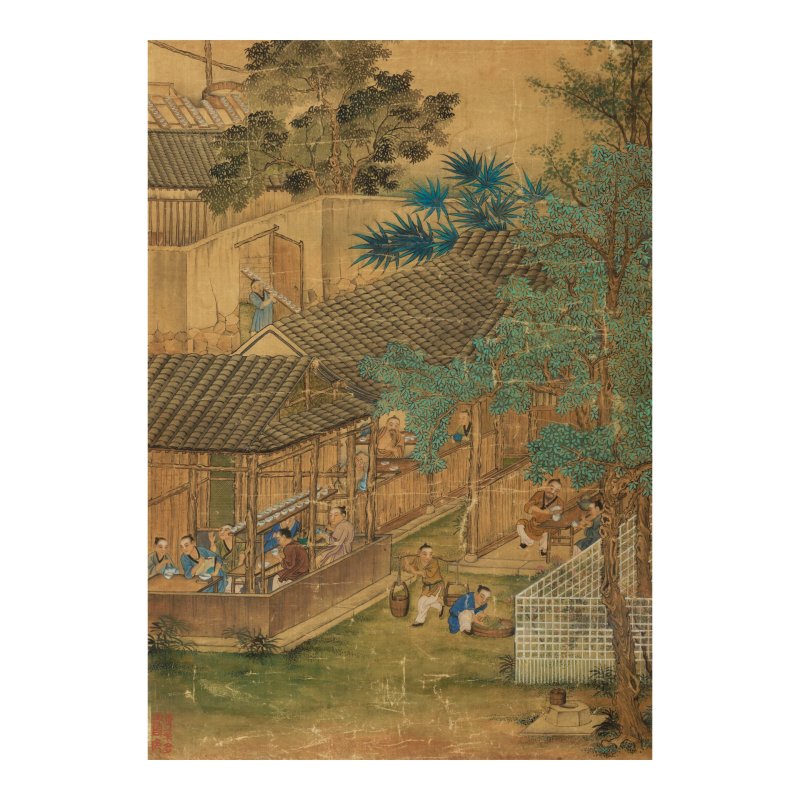
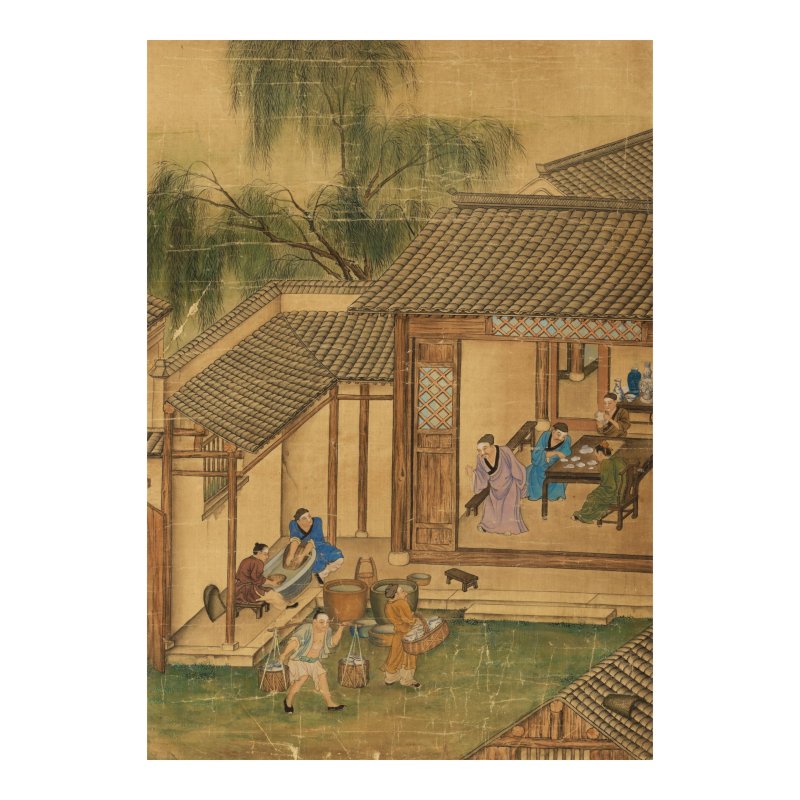
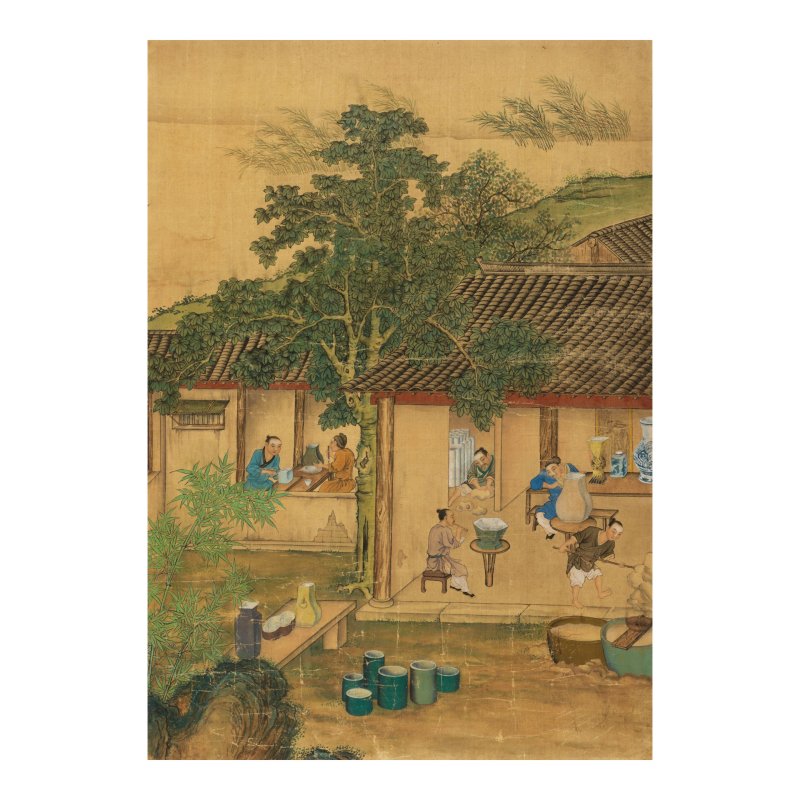
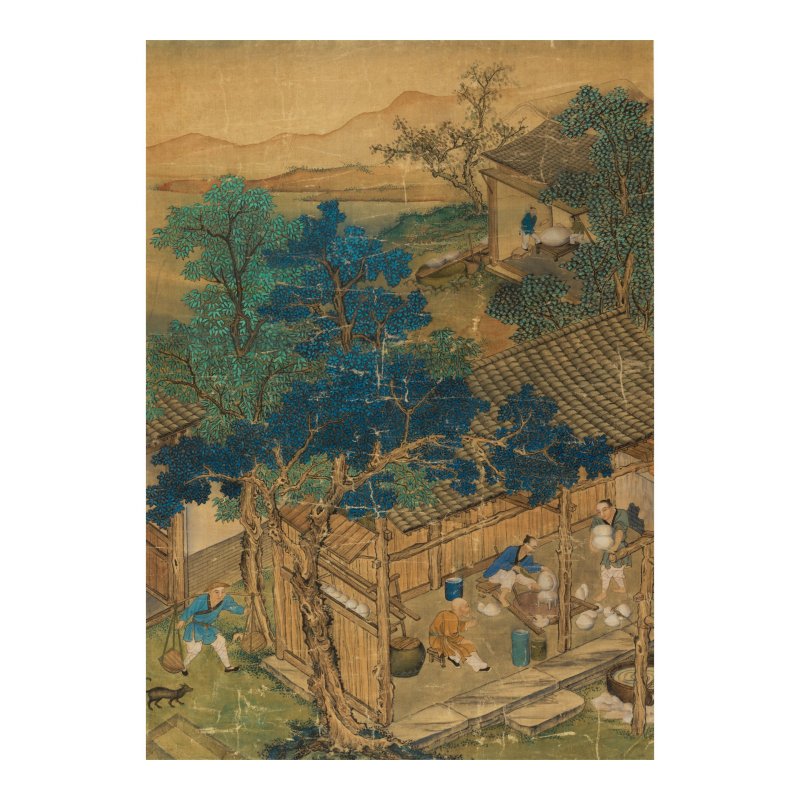
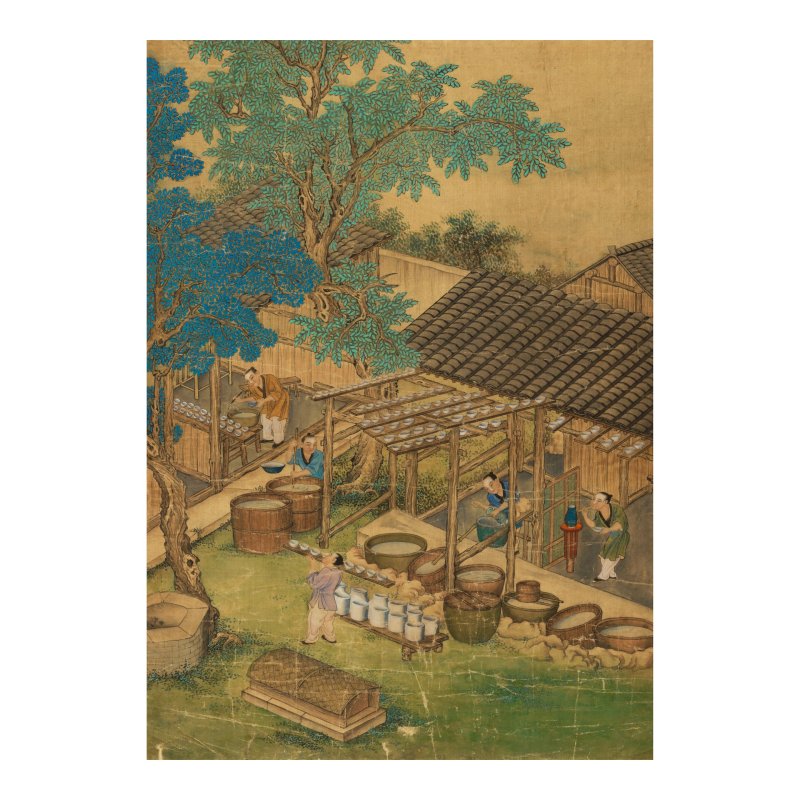
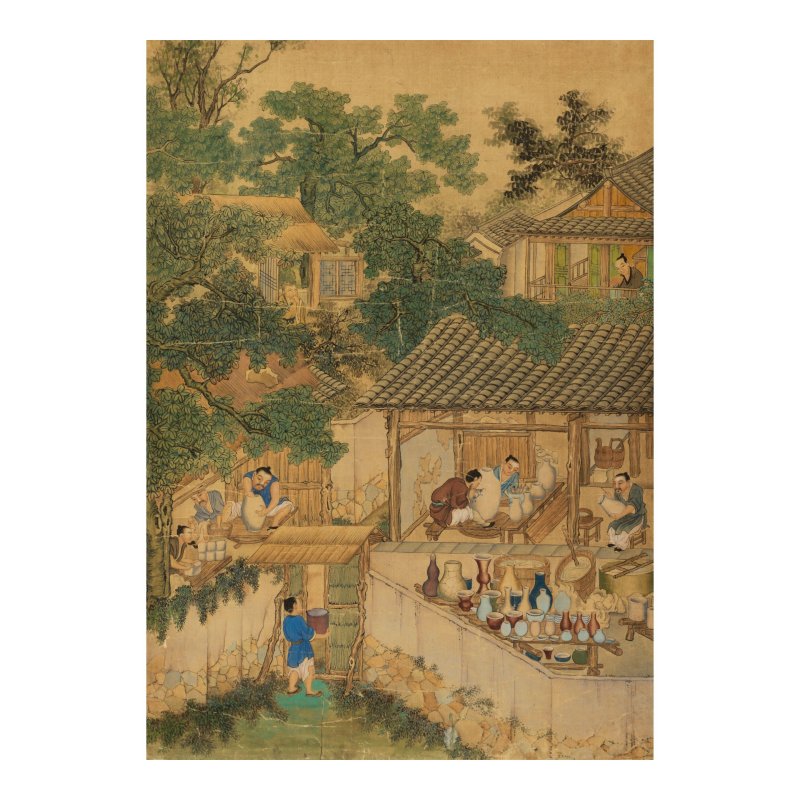
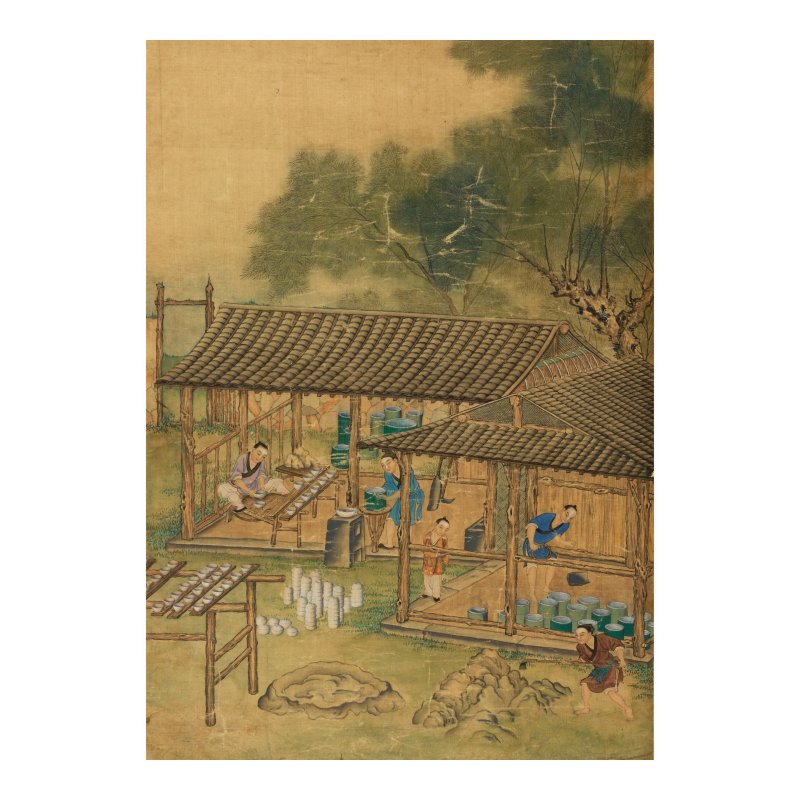
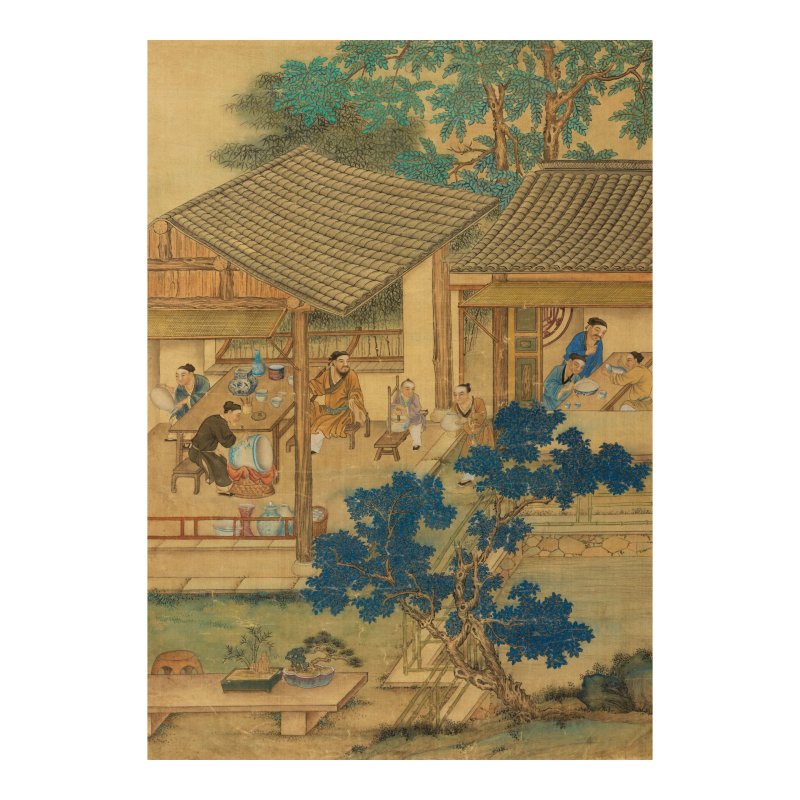
This album of eight images presents a visualization of the steps of porcelain production at the Jingdezhen Qing Imperial kilns. The images that compose this album are adopted from the illustrations used in Tang Ying (1682-1756)'s Taoye Tu Shuo 陶冶圖説, a description of the twenty essential steps to produce fine porcelain--from initially mining to the clay to the final act of thanking the gods for the fulfillment of wishes after the finished product had shipped. A close examination of the individual leaves in this album reveals the labors of young and old craftsmen working in rustic, open-air courtyards. Corresponding with Tang Ying's commentary, the eight leaves of this album depict:
Decorating round wares with blue and white 圓器青花 (fig.1)
Washing and Refining Clay 淘練泥土 (fig.2)
Decorating and painting sculpted wares 製畫琢器()
Repairing molds for round wares 圓器修模 ()
Dipping and spraying glaze 蘸釉吹釉 ()
Building sculpted wares by hand 琢器造坯 ()
Making saggars 製造匣缽 ()
Decorating round and sculpted wares with overglaze enamels 圓琢洋采 ()
The flurry of activity accurately describes the production process and is corroborated by the contemporary eyewitness account of the Jesuit priest Francois Xavier d'Entrecolles (Yin Hongxu, 1664–1741), who stated that a single porcelain vessel could pass through the hands of as many as seventy craftsmen before completion. The presence of artisans using overglaze enamels demonstrates the album's painters were depicting the most state-of-the art techniques in porcelain decoration.
Beyond illustrating the porcelain manufacturing process, this album also reflects the aesthetics and standards of the early 18th century Qing court painting studios. The meticulous execution and attention to fine details, as well as the synthesis of different painting methods and techniques from outside the court, are all hallmarks of the Imperial ateliers under the reign of the Yongzheng and Qianlong emperors. The consistent treatment of light and distance evince the presence of European artists; and, the fine silk and vivid mineral pigments are a tribute to the wealth of the court and its high standards for excellence in art.
At least four imperial commissions of porcelain production albums were created under the aegis of the early Qing court. The present album is most faithful in composition to the Chonghua Gong (Palace of Abundant Splendor) version, although the leaves of the present album are twice the size. Originally commissioned in 1738, the Chonghua Gong version was documented as being completed in 1743. As with many Qing court paintings, the Chenghua Gong was a collaborative effort by several court artists, including Sun Hu (architecture), Ding Guanpeng (figures), and Zhou Kun (rocks and trees), whose joint efforts accompanied the descriptive commentary of Tang Ying. The Chonghua Gong version of was sold at Christie's Hong Kong in their April 1996 auction, and the album is currently held in a private Taiwanese collection. Although the artists of the present lot are not identified by inscription or seal, the fidelity to the 1738-1743 Chonghua Gong version is notable. The present lot may have served as a preparatory version for the Chonghua Gong version.
In addition, the Hong Kong Maritime Museum houses a handscroll version of from the Huaihaitang Collection, bearing the signature of Jean-Denis Attiret (Wang Zhicheng, 1702-1768), which has been dated to the early nineteenth century. While the handscroll preserves the general compositions of the various stages of porcelain production integrated into a continuous landscape setting, its execution of detail and quality of brushwork are inferior to those of the present lot.
Reference: Wang, Xiaoqin et al. "Spatial Organization and Interaction Mechanisms in Jingdezhen Ceramic Production: Visual Analysis of the Qianlong-era Tao Ye Tu." In 12, 2002 (2025).
(傳)孫祜(活躍於1736-1745年)/丁觀鵬(活躍於1740-1768)/周鲲(活躍於1741-1748)
陶冶圖 設色絹本 冊頁八開 清乾隆 十八世紀
藏印:青柏多壽色
香港蘇富比,「中國瓷器工藝品」,2003年10月26日,拍品編號156
此八開《陶冶圖》冊以圖像形式呈現了清代景德鎮御窯廠的製瓷工序,冊中圖繪取材自唐英(1682-1756)主持修製的《陶冶圖說》,該圖說詳述從採石製泥,至束草裝桶,及至祀神酬願等二十道關鍵工序。細觀各開,可見老少工匠於樸拙簡素的露天院落中辛勤操作之景。與唐英題記相對應,本冊八開依次描繪:圓器青花()、淘練泥土()、製畫琢器()、圓器修模()、蘸釉吹釉()、琢器造坯()、製造匣缽()及圓琢洋采()。
畫中忙碌卻有序的場景,栩栩如生地再現了當時的製瓷流程,正如當時長駐景德鎮的法國傳教士殷弘緒(François Xavier d'Entrecolles,1664–1741)所記載:一件瓷器在完成之前,可能得經多達七十位工匠之手。此冊最後一頁可見匠人施用洋彩,足證畫師所繪乃當時最先進的瓷器裝飾技藝。
此冊不僅為製瓷工藝的圖解,同時也反映了十八世紀初清宮畫院的美學標準與品味。其筆法精謹、細節入微,且融匯宮外畫坊繪畫技法,符合雍乾兩朝宮廷畫院作品的特徵。對於光影明暗及遠近視角的處理,前後一貫,顯見清宮歐洲畫師的影響;而所用細絹與鮮麗礦物顏料,則尤見宮廷用料的奢華及其對卓絕藝術的追求。
清初宮廷畫院至少敕繪陶冶圖冊四次,本冊構圖及風格極為貼近「重華宮」藏本,惟尺幅約為其兩倍。重華宮本始繪於乾隆三年(1738),至乾隆八年(1743)方告完成,由孫祜(繪界畫)、丁觀鵬(繪人物)、周鯤(繪樹石)等宮廷畫家合繪,並附唐英題記,圖文互證。該重華宮本《陶冶圖》冊於一九九六年四月二十八日由香港佳士得釋出,拍品編號65,現為臺灣私人收藏。本冊雖無畫家款識或鈐印,然其忠實於重華宮本之程度,洵屬可觀,或為該本之稿本。此外,香港海事博物館藏有懷海堂所收一幀王致誠(Jean-Denis Attiret, 1702-1768)款《陶冶圖》手卷,斷為十九世紀初本,雖亦保留陶冶工序大致構圖,以山水融爲通景,然其細節筆法,顯未及本拍品。
Album of eight leaves, ink and color on silk, unsigned, with a collector's seal.
18 1/8 x 12 3/4in (46 x 32.4cm), each leaf
Footnotes
Provenance:
Sotheby's, Hong Kong, Fine Chinese Ceramic and Works of Art: Thirty Years, 26 October 2003, lot 156
This album of eight images presents a visualization of the steps of porcelain production at the Jingdezhen Qing Imperial kilns. The images that compose this album are adopted from the illustrations used in Tang Ying (1682-1756)'s Taoye Tu Shuo 陶冶圖説, a description of the twenty essential steps to produce fine porcelain--from initially mining to the clay to the final act of thanking the gods for the fulfillment of wishes after the finished product had shipped. A close examination of the individual leaves in this album reveals the labors of young and old craftsmen working in rustic, open-air courtyards. Corresponding with Tang Ying's commentary, the eight leaves of this album depict:
Decorating round wares with blue and white 圓器青花 (fig.1)
Washing and Refining Clay 淘練泥土 (fig.2)
Decorating and painting sculpted wares 製畫琢器()
Repairing molds for round wares 圓器修模 ()
Dipping and spraying glaze 蘸釉吹釉 ()
Building sculpted wares by hand 琢器造坯 ()
Making saggars 製造匣缽 ()
Decorating round and sculpted wares with overglaze enamels 圓琢洋采 ()
The flurry of activity accurately describes the production process and is corroborated by the contemporary eyewitness account of the Jesuit priest Francois Xavier d'Entrecolles (Yin Hongxu, 1664–1741), who stated that a single porcelain vessel could pass through the hands of as many as seventy craftsmen before completion. The presence of artisans using overglaze enamels demonstrates the album's painters were depicting the most state-of-the art techniques in porcelain decoration.
Beyond illustrating the porcelain manufacturing process, this album also reflects the aesthetics and standards of the early 18th century Qing court painting studios. The meticulous execution and attention to fine details, as well as the synthesis of different painting methods and techniques from outside the court, are all hallmarks of the Imperial ateliers under the reign of the Yongzheng and Qianlong emperors. The consistent treatment of light and distance evince the presence of European artists; and, the fine silk and vivid mineral pigments are a tribute to the wealth of the court and its high standards for excellence in art.
At least four imperial commissions of porcelain production albums were created under the aegis of the early Qing court. The present album is most faithful in composition to the Chonghua Gong (Palace of Abundant Splendor) version, although the leaves of the present album are twice the size. Originally commissioned in 1738, the Chonghua Gong version was documented as being completed in 1743. As with many Qing court paintings, the Chenghua Gong was a collaborative effort by several court artists, including Sun Hu (architecture), Ding Guanpeng (figures), and Zhou Kun (rocks and trees), whose joint efforts accompanied the descriptive commentary of Tang Ying. The Chonghua Gong version of was sold at Christie's Hong Kong in their April 1996 auction, and the album is currently held in a private Taiwanese collection. Although the artists of the present lot are not identified by inscription or seal, the fidelity to the 1738-1743 Chonghua Gong version is notable. The present lot may have served as a preparatory version for the Chonghua Gong version.
In addition, the Hong Kong Maritime Museum houses a handscroll version of from the Huaihaitang Collection, bearing the signature of Jean-Denis Attiret (Wang Zhicheng, 1702-1768), which has been dated to the early nineteenth century. While the handscroll preserves the general compositions of the various stages of porcelain production integrated into a continuous landscape setting, its execution of detail and quality of brushwork are inferior to those of the present lot.
Reference: Wang, Xiaoqin et al. "Spatial Organization and Interaction Mechanisms in Jingdezhen Ceramic Production: Visual Analysis of the Qianlong-era Tao Ye Tu." In 12, 2002 (2025).
(傳)孫祜(活躍於1736-1745年)/丁觀鵬(活躍於1740-1768)/周鲲(活躍於1741-1748)
陶冶圖 設色絹本 冊頁八開 清乾隆 十八世紀
藏印:青柏多壽色
香港蘇富比,「中國瓷器工藝品」,2003年10月26日,拍品編號156
此八開《陶冶圖》冊以圖像形式呈現了清代景德鎮御窯廠的製瓷工序,冊中圖繪取材自唐英(1682-1756)主持修製的《陶冶圖說》,該圖說詳述從採石製泥,至束草裝桶,及至祀神酬願等二十道關鍵工序。細觀各開,可見老少工匠於樸拙簡素的露天院落中辛勤操作之景。與唐英題記相對應,本冊八開依次描繪:圓器青花()、淘練泥土()、製畫琢器()、圓器修模()、蘸釉吹釉()、琢器造坯()、製造匣缽()及圓琢洋采()。
畫中忙碌卻有序的場景,栩栩如生地再現了當時的製瓷流程,正如當時長駐景德鎮的法國傳教士殷弘緒(François Xavier d'Entrecolles,1664–1741)所記載:一件瓷器在完成之前,可能得經多達七十位工匠之手。此冊最後一頁可見匠人施用洋彩,足證畫師所繪乃當時最先進的瓷器裝飾技藝。
此冊不僅為製瓷工藝的圖解,同時也反映了十八世紀初清宮畫院的美學標準與品味。其筆法精謹、細節入微,且融匯宮外畫坊繪畫技法,符合雍乾兩朝宮廷畫院作品的特徵。對於光影明暗及遠近視角的處理,前後一貫,顯見清宮歐洲畫師的影響;而所用細絹與鮮麗礦物顏料,則尤見宮廷用料的奢華及其對卓絕藝術的追求。
清初宮廷畫院至少敕繪陶冶圖冊四次,本冊構圖及風格極為貼近「重華宮」藏本,惟尺幅約為其兩倍。重華宮本始繪於乾隆三年(1738),至乾隆八年(1743)方告完成,由孫祜(繪界畫)、丁觀鵬(繪人物)、周鯤(繪樹石)等宮廷畫家合繪,並附唐英題記,圖文互證。該重華宮本《陶冶圖》冊於一九九六年四月二十八日由香港佳士得釋出,拍品編號65,現為臺灣私人收藏。本冊雖無畫家款識或鈐印,然其忠實於重華宮本之程度,洵屬可觀,或為該本之稿本。此外,香港海事博物館藏有懷海堂所收一幀王致誠(Jean-Denis Attiret, 1702-1768)款《陶冶圖》手卷,斷為十九世紀初本,雖亦保留陶冶工序大致構圖,以山水融爲通景,然其細節筆法,顯未及本拍品。