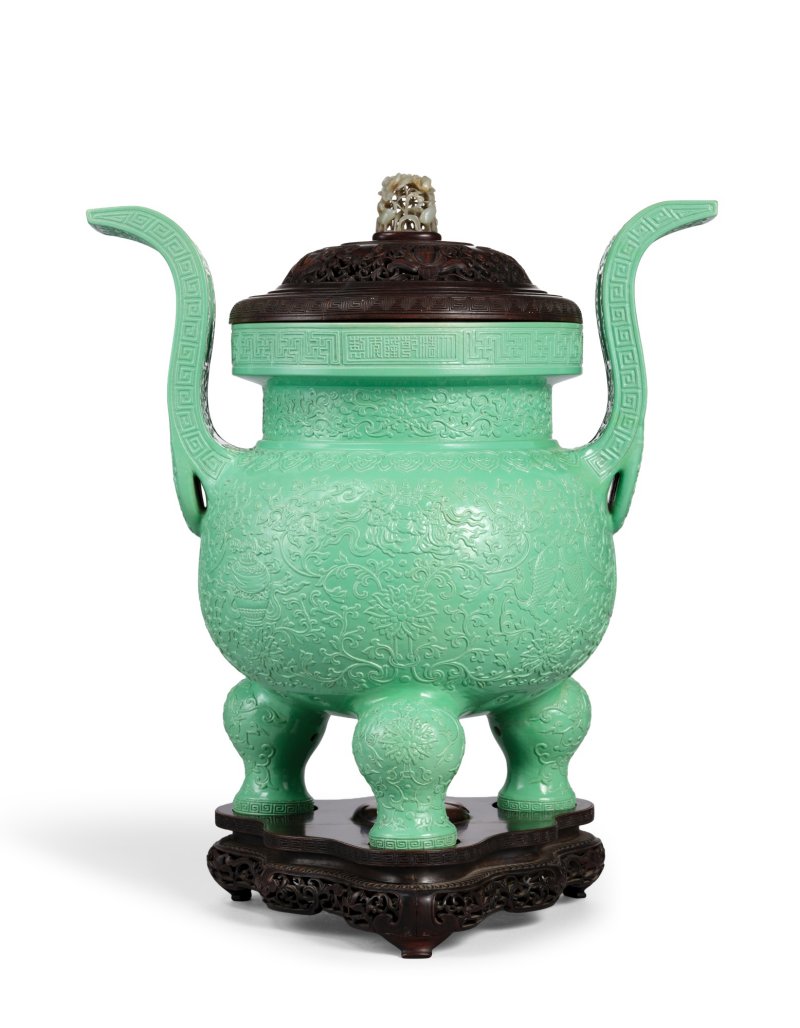

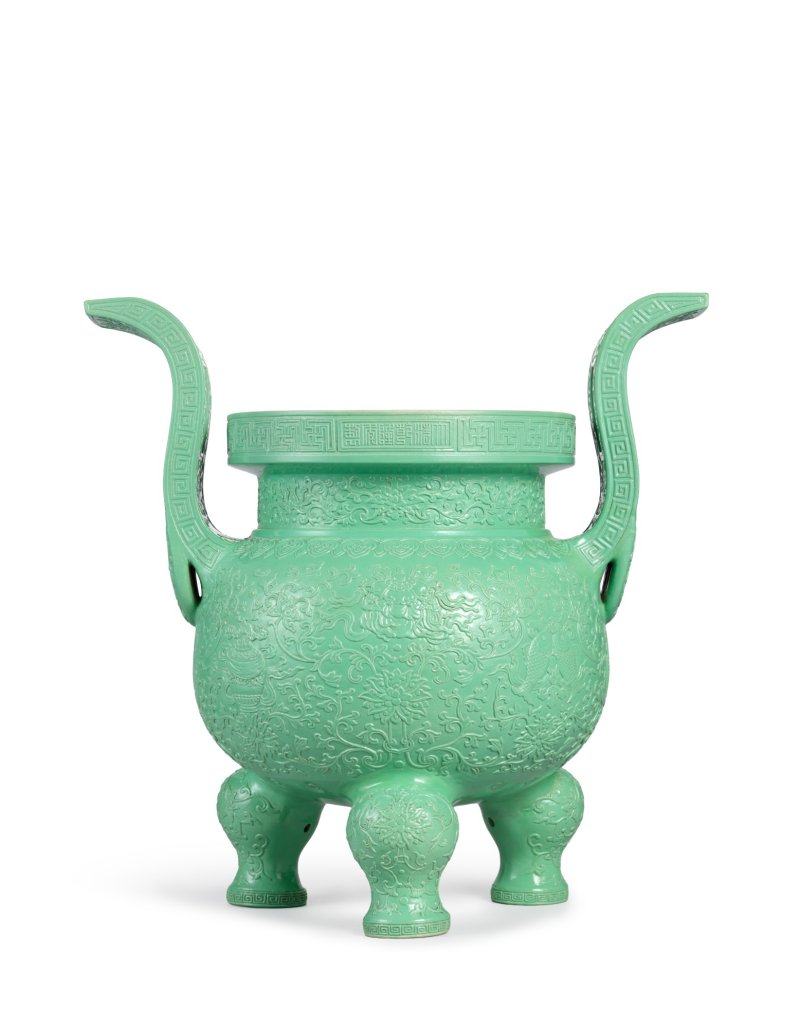
Lot 6034 An extremely rare and large relief-carved turquoise-glazed 'bajixiang' incense burner, Seal mark and period of Qianlong | 清乾隆 松石綠釉浮雕八吉祥紋雙耳三足爐 《大清乾隆年製》款
落槌价
预展中
成交价
预展中
| 拍卖公司 | 苏富比 |
|---|---|
| 拍卖时间 | 2026年10月30日 |
拍品信息
拍品名称
An extremely rare and large relief-carved turquoise-glazed 'bajixiang' incense burner, Seal mark and period of Qianlong | 清乾隆 松石綠釉浮雕八吉祥紋雙耳三足爐 《大清乾隆年製》款
起拍价
HKD 1,200,000
估值区间
1,200,000 - 2,400,000 HKD
尺寸
未知
品相
如欲了解本拍品狀況的更多資訊,請聯絡 Rubie.Fong@sothebys.com
更多信息
wood cover with jade finial, and wood stand
w. 44 cm, h. 43.7 cm
来源:Collection of Mrs Grace Mary “Billie” Liddell (1900–1974).
Collection of Mr and Mrs Leong Seng, Hong Kong, gifted by the above, circa 1950s; thence by descent in the family.
图录
说明:來源
李岱夫人(1900–1974年)收藏
沈仲強伉儷收藏,香港,1950年代受贈自上述來源,後由家族傳承
The vessel was formerly in the collection of the British aristocrat Mrs Grace Mary "Billie" Liddell (1900–1974), a legendary equestrian figure who was once praised by the South China Morning Post as being synonymous with Hong Kong's Happy Valley racecourse. In the 1950s, Mrs Liddell gifted this magnificent vessel to the current owner's grandfather, Dr Leon Seng, who served as the resident orthopedic specialist for the Shanghai Race Club. The gift was a profound gesture of gratitude for Dr Seng's benevolence and exceptional medical skill. Their enduring friendship was further cemented when Mrs Liddell bequeathed a portion of her estate to Dr Seng and his wife upon her passing, and the present incense burner has remained a treasured family heirloom ever since.
此爐傳承有緒,其來源與二十世紀中葉上海及香港的賽馬界有著深厚淵源。本品原為英國貴族格蕾絲.瑪麗.「比利」.李岱夫人(1900–1974年)舊藏。李岱夫人乃當時賽馬界的傳奇人物,曾被《南華早報》譽為香港跑馬地的代名詞。1950年代,李岱夫人將此件珍貴的香爐贈予當時擔任上海賽馬會駐場骨科專科醫生的沈仲強醫生(即現藏家之祖父),以答謝其仁心仁術與精湛醫術。兩人交情深厚,李岱夫人離世時更將部分遺產贈予沈醫生伉儷,而此件御製香爐亦自此由沈氏家族珍藏,傳承至今。
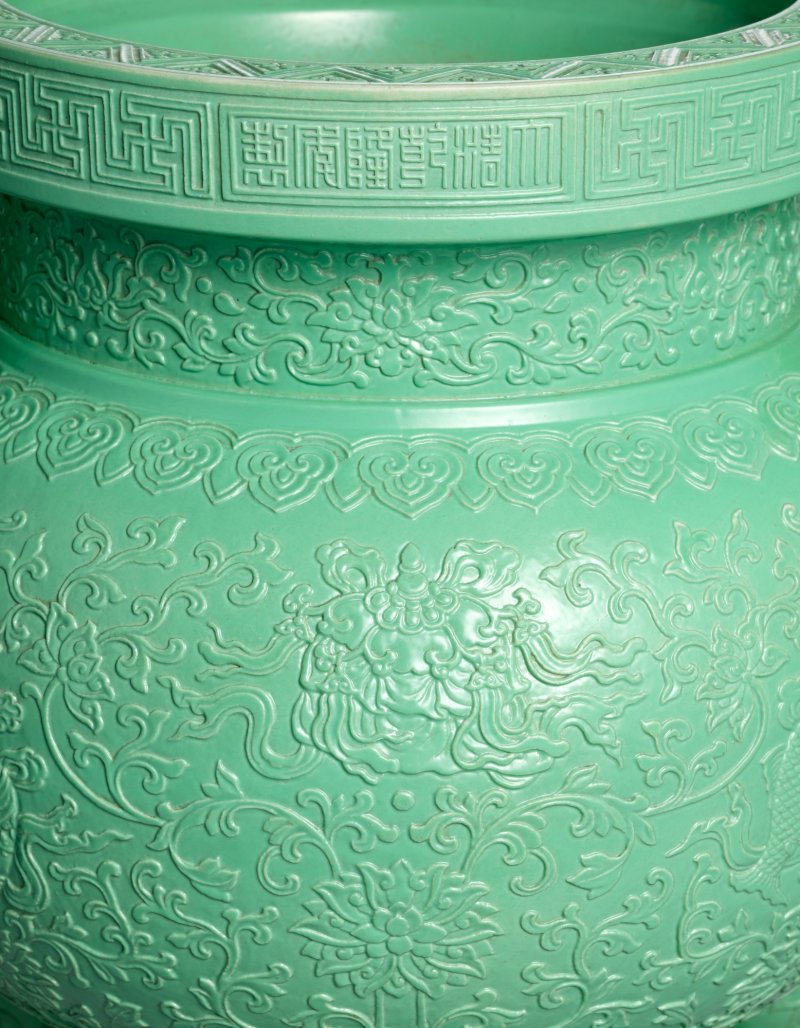
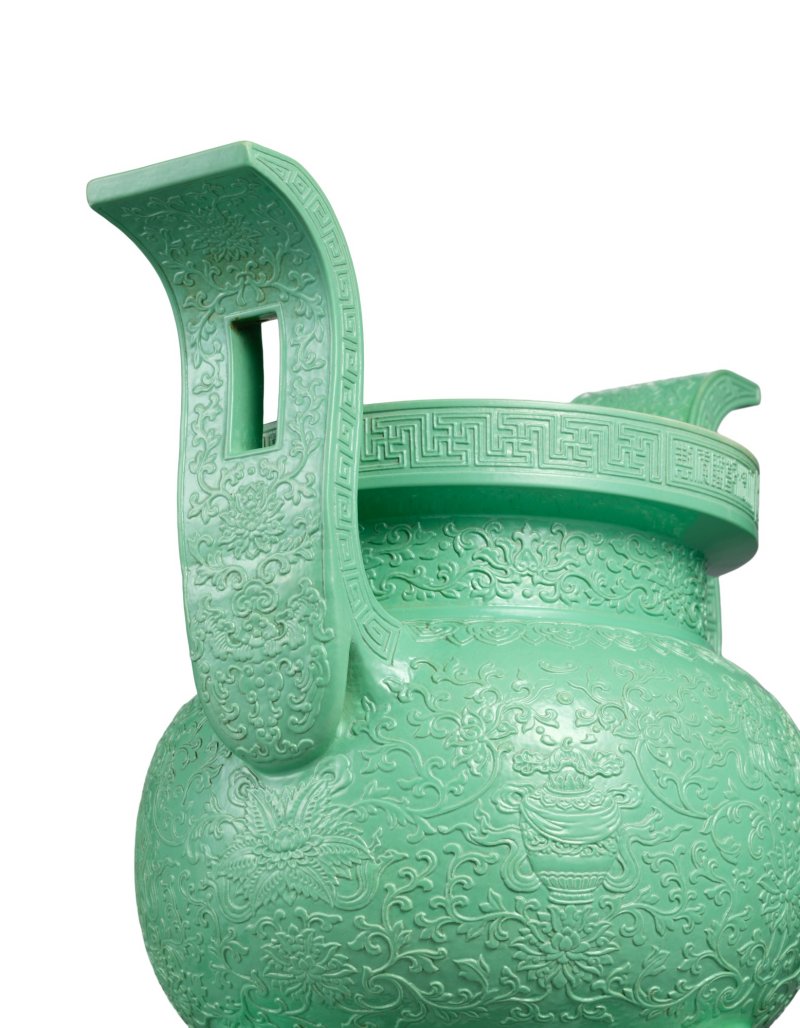
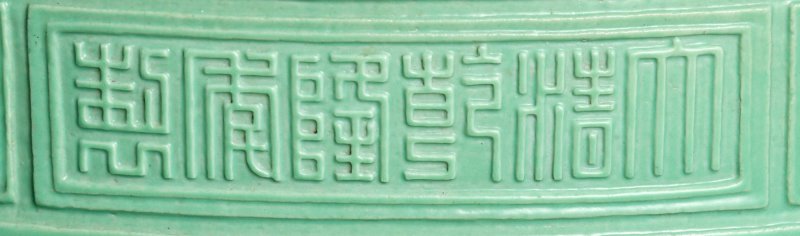
This exceptionally rare incense burner represents a remarkable innovation in porcelain design and glaze technology during the Qianlong period. Modelled after archaic bronze ding vessels, the censer is magnificently decorated in deep relief with the bajixiang (Eight Buddhist Emblems) amidst dense lotus scrolls, all under a striking, opaque turquoise glaze. The six-character Qianlong seal mark is unusually and prominently carved in relief within a rectangular cartouche along the rim, further distinguishing this vessel as an important imperial commission, likely intended for use on an altar within one of the imperial palaces or temples.
The glaze applied to the present incense burner represents a new departure for porcelain design in the early 18th century. While it was not uncommon to apply coloured low-fired glazes on a high-fired, unglazed biscuit, it was highly unusual to apply pastel-coloured glazes mixed with white enamel in this manner. The opaque quality of the glaze admirably reproduces the matte gloss and smooth texture of natural turquoise gemstone, and the intricate relief design contributes further to the illusion that the vessel was carved from a solid block of stone.
The vibrant, lighter turquoise tone of the present censer is particularly rare. It closely relates to two similarly coloured turquoise-glazed examples in the Palace Museum, Beijing: a reticulated hat stand and a reticulated flower basket, both with carved Qianlong marks and of the period, illustrated in Zhongguo taoci quanji [Complete series on Chinese ceramics], Shanghai, 1999-2000, vol. 15, pls. 99 and 100.
For other examples of this relief-carved turquoise-glazed technique, compare a pair of pomegranate-shaped vases formerly in the collection of Helen D. Ling and E.T. Chow, sold in our Hong Kong rooms, 8th October 2012, lot 112; though it is noted that the glaze on the pomegranate vases is of a darker tone than the present incense burner. A meiping decorated in this technique with formal flower scrolls and phoenixes is in the Baur Collection, Geneva, illustrated in John Ayers, Chinese Ceramics in the Baur Collection, vol. 2, Geneva, 1999, pl. 324; and its pair in the National Museum of China, Beijing, is illustrated in Zhongguo taoci quanji, op. cit., pl. 102. See also a lantern vase with relief decoration under a similar turquoise glaze, also of Qianlong mark and period, in the Palace Museum, Beijing, illustrated in Kangxi, Yongzheng, Qianlong. Qing Porcelain from the Palace Museum Collection, Hong Kong, 1989, p. 455, pl. 137.
此件松石綠釉浮雕八吉祥紋雙耳三足爐極為珍罕,展現了乾隆時期御窯在瓷器設計與釉色研發上的卓越創新。此爐器形仿古青銅鼎,通體以高浮雕技法精雕八吉祥及纏枝蓮紋,罩施明艷奪目的不透明松石綠釉。口沿處長方形開光內浮雕「大清乾隆年製」六字篆書款,極為獨特醒目,彰顯其作為重要御製禮器的身份,應為清宮內廷或皇家寺廟佛堂之供器。
本品所施之松石綠釉,代表了十八世紀初期瓷器設計的新突破。雖然在素胎上施低溫彩釉的工法並不罕見,但將混合了白釉的粉彩系釉料以此方式施於素胎之上,則屬創新之舉。此種釉面呈現出不透明的質感,完美還原了天然綠松石溫潤柔和的光澤與紋理,加上精緻的浮雕工藝,使整器宛如由整塊綠松石雕琢而成,巧奪天工。
本爐之松石綠釉呈色明麗,較為淺淡,極為罕見。北京故宮博物院藏有兩件釉色相近的清乾隆松石綠釉御瓷,分別為一件鏤空冠架及一件鏤空花籃,皆帶有雕刻之乾隆年款,錄於《中國陶瓷全集》,上海,1999-2000年,卷15,圖版99及100,可資比較。
參考其他採用此類浮雕松石綠釉技法之作,可見一對仇焱之及林明珠舊藏之松石綠釉浮雕石榴尊,售於香港蘇富比2012年10月8日,編號112,然該對石榴尊之釉色較本品略深。日內瓦鮑爾收藏中有一件飾以纏枝花卉及鳳凰紋之同類技法梅瓶,錄於John Ayers,《Chinese Ceramics in the Baur Collection》,卷2,日內瓦,1999年,圖版324;其成對之作現藏中國國家博物館,錄於《中國陶瓷全集》,前述出處,圖版102。另見北京故宮博物院藏一件清乾隆松石綠釉浮雕燈籠尊,錄於《故宮珍藏康雍乾瓷器圖錄》,香港,1989年,頁455,圖版137。
常见问题
这件An extremely rare and large relief-carved turquoise-glazed 'bajixiang' incense burner, Seal mark and period of Qianlong | 清乾隆 松石綠釉浮雕八吉祥紋雙耳三足爐 《大清乾隆年製》款的成交价是多少?
落槌价为 预展中。 成交价为 预展中。
拍品的品相状况如何?
如欲了解本拍品狀況的更多資訊,請聯絡 Rubie.Fong@sothebys.com
这件拍品的流传来源是什么?
Collection of Mrs Grace Mary “Billie” Liddell (1900–1974).
Collection of Mr and Mrs Leong Seng, Hong Kong, gifted by the above, circa 1950s; thence by descent in the family.
图录
Collection of Mr and Mrs Leong Seng, Hong Kong, gifted by the above, circa 1950s; thence by descent in the family.
图录